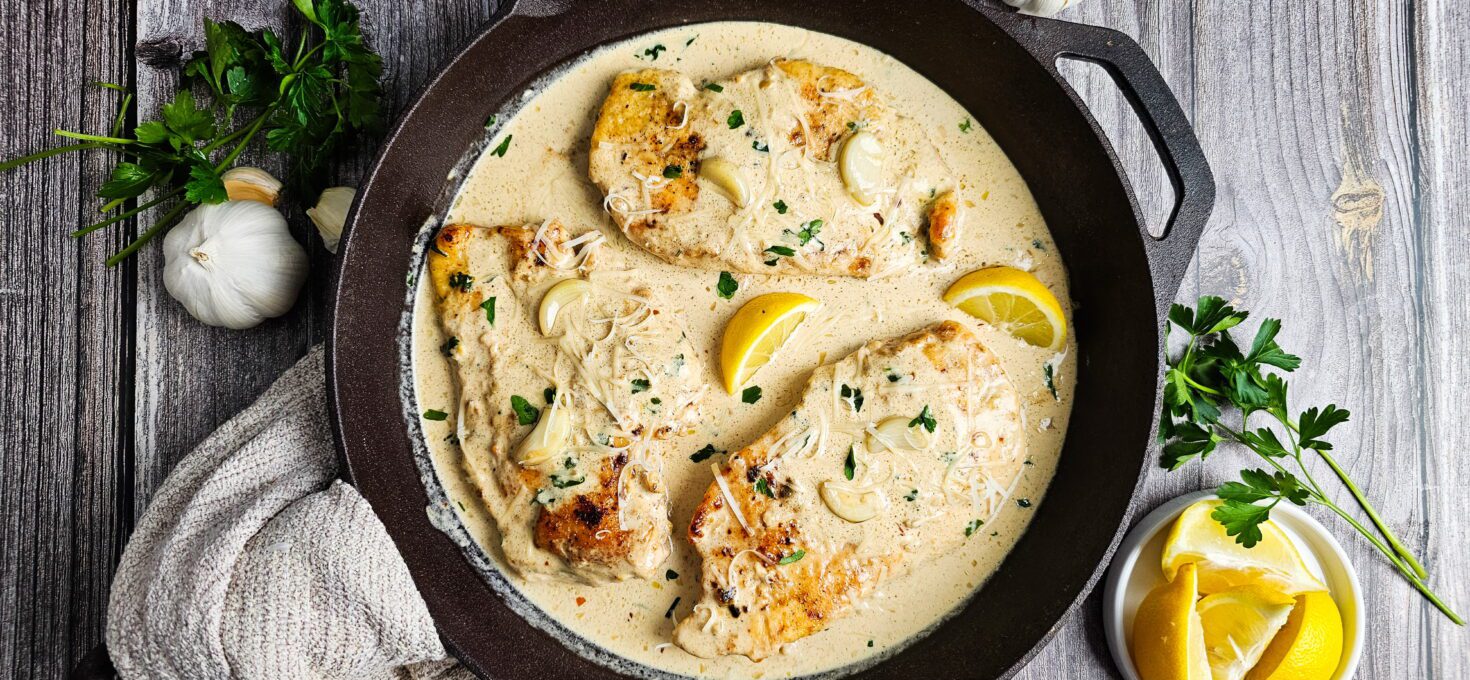
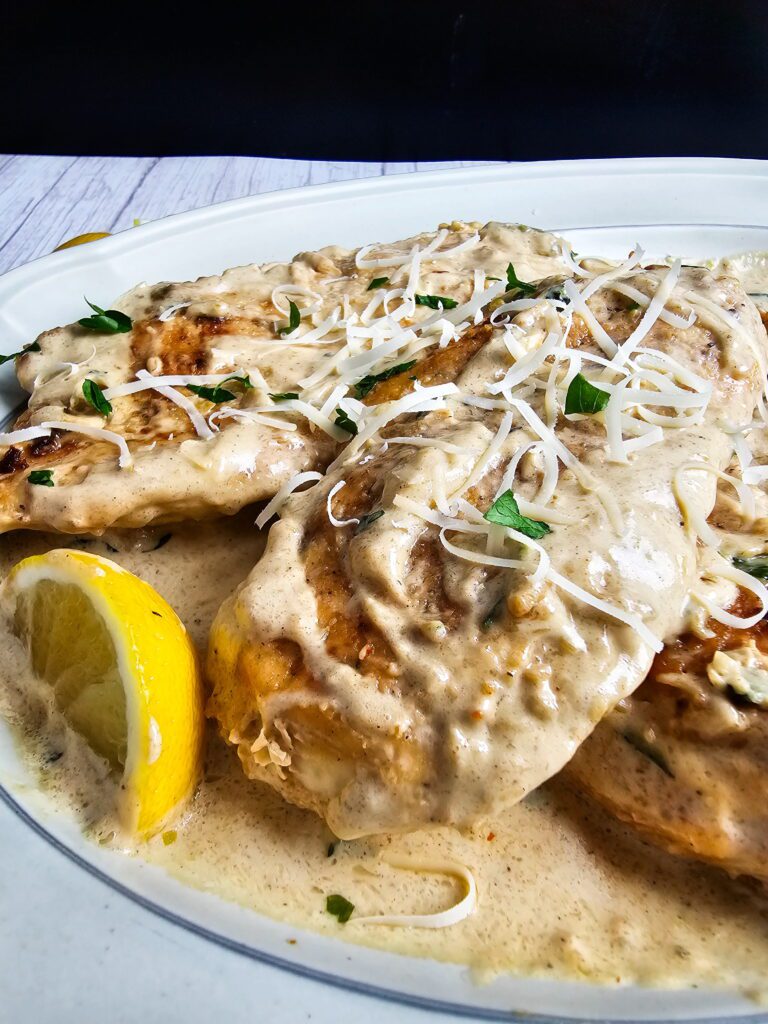
This restaurant style creamy garlic chicken skillet is the version you make when you want something that genuinely tastes like it came out of a professional kitchen — and still lands on the table in 30 minutes. The difference between this and every other creamy garlic chicken recipe you have seen is the garlic itself. Instead of a quick sauté, the whole cloves cook low and slow for 6 to 8 minutes until they turn golden, sweet, and deeply caramelized. That single step transforms sharp raw garlic into something rich and almost nutty that no amount of garlic powder can replicate.
From there, a touch of Dijon mustard rounds out the sauce, a hit of lemon juice cuts the richness, and freshly grated Parmesan adds body making the sauce cling to every piece of chicken instead of sliding off. These are the exact upgrades a chef would make to the standard version, and every one of them is built into this recipe.
Once you make it this way you will not go back to the basic version.
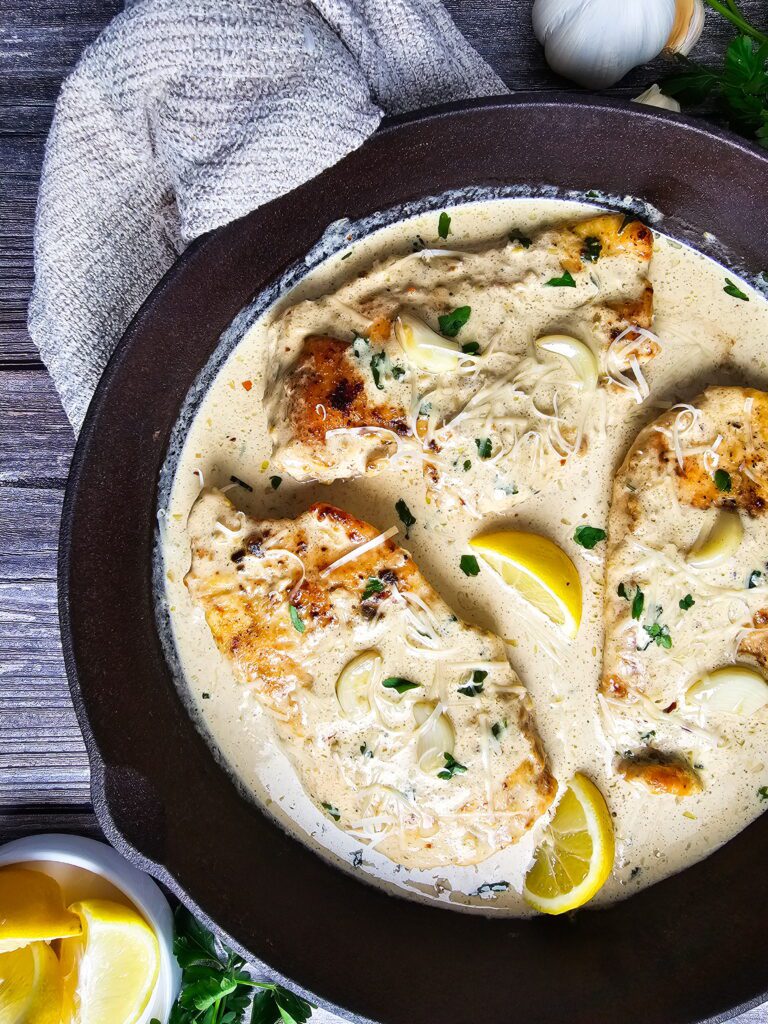
This restaurant style creamy garlic chicken skillet is a one-pan dinner made with chicken cutlets seared until golden, whole garlic cloves caramelized in butter for 6 to 8 minutes until sweet and nutty, and a cream sauce built with chicken broth, lemon juice, Dijon mustard, and Parmesan. The whole process takes 30 minutes. The technique of slow-cooking the garlic until caramelized rather than quickly sautéing it is what gives this dish its restaurant-quality depth, and it is the step that separates this version from every basic creamy garlic chicken recipe.
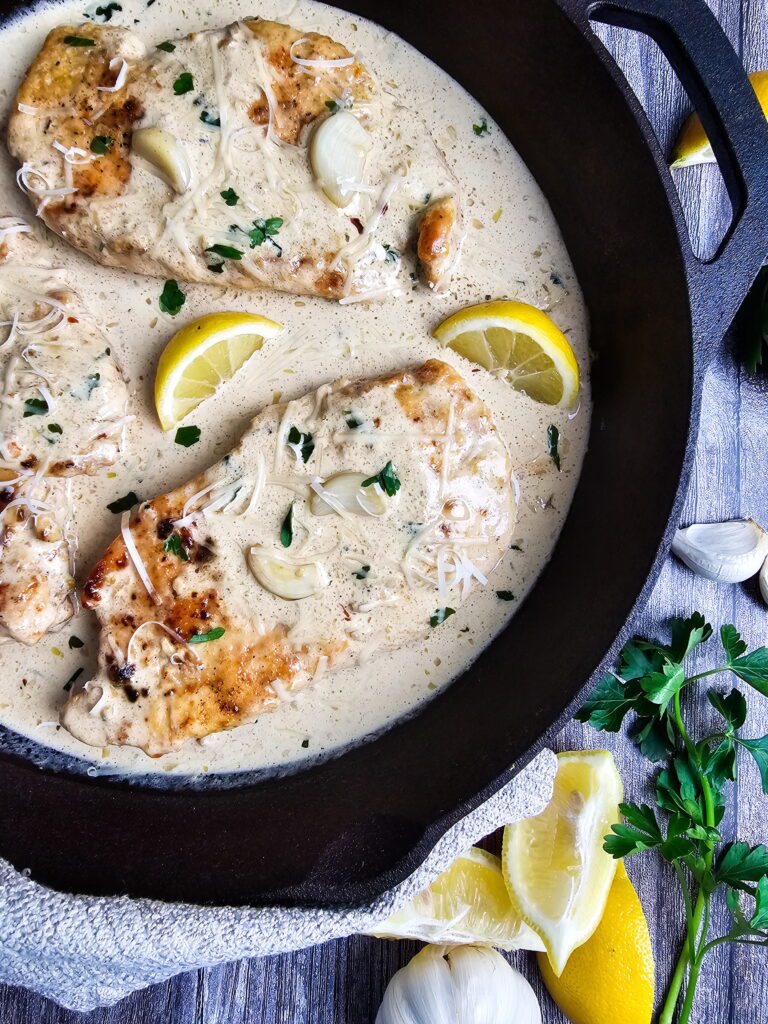
Why This Restaurant-Style Creamy Garlic Chicken Skillet Works?
The foundation of this dish is patience with the garlic. Most recipes tell you to sauté garlic for 30 seconds or a minute until fragrant. This recipe gives it 6 to 8 minutes over medium heat until each clove turns golden and soft. That time transforms the chemistry of the garlic entirely — the sharp, pungent compounds mellow out and the natural sugars caramelize, a process food scientists call the Maillard reaction, producing a flavor that is sweet, nutty, and rich without any bitterness.It is the single most important step in this recipe and the reason it tastes like restaurant food instead of home cooking.
The flour dredge on the chicken does two things. It creates a golden crust during searing that adds texture and visual appeal, and it acts as a thickener that slowly releases into the sauce as everything simmers together, giving the sauce body without making it feel heavy or gluey.
The Dijon mustard is the ingredient that most home cooks skip, and most restaurants would never leave out. It does not make the sauce taste like mustard — it acts as an emulsifier and flavor bridge, rounding out the acidity from the lemon and the richness from the cream into a cohesive sauce that tastes complex rather than one-dimensional.
Deglazing with chicken broth after the garlic step lifts the fond — the caramelized browned bits stuck to the bottom of the pan from searing the chicken. That fond is concentrated flavor that would otherwise be lost. It dissolves into the broth and becomes the base of a sauce with genuine depth.
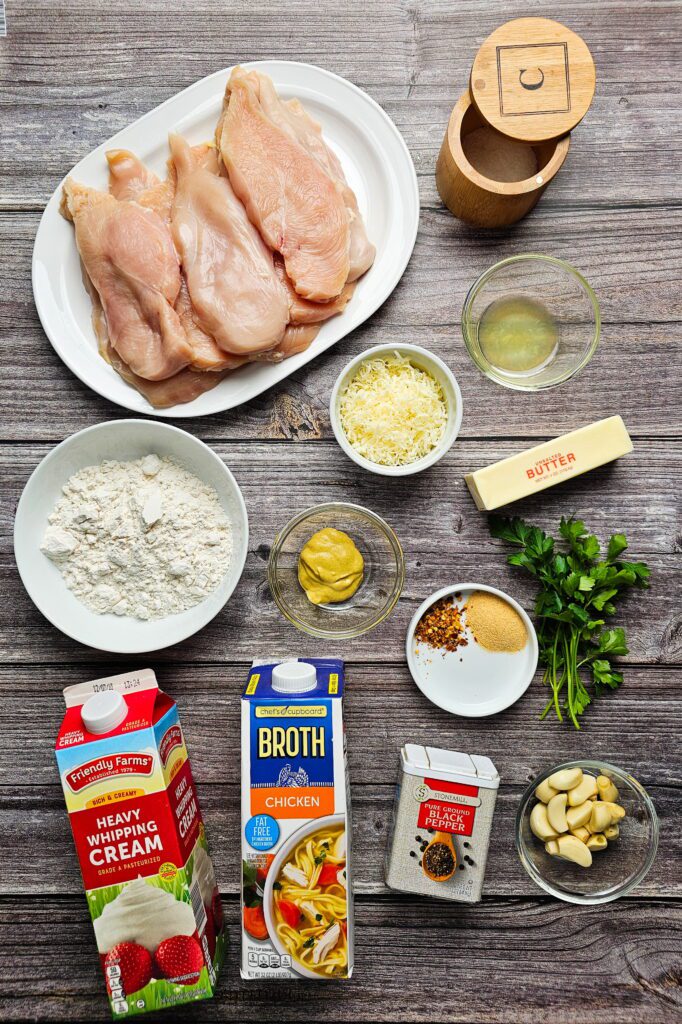
Ingredients for Restaurant Style Creamy Garlic Chicken
- 3 large boneless skinless chicken breasts, sliced into 6 thin cutlets – The base of the dish; thin slices ensure even cooking and a tender, juicy bite.
- Salt & freshly ground black pepper – Simple seasoning that builds flavor from the start.
- About ½ cup flour (for dredging) – Light coating that helps create a golden crust and thickens the sauce.
- 1 ½ tablespoons olive oil – Used for searing the chicken and building flavor in the pan.
- 3 tablespoons butter, divided – Adds richness; used for both searing and caramelizing garlic.
- 1 whole head garlic, cloves peeled – Slowly cooked until sweet and golden for deep, restaurant-style flavor.
- ¾ cup chicken broth or stock – Deglazes the pan and forms the savory base of the sauce.
- 1 teaspoon lemon juice (increased for balance) – Brightens the sauce and cuts through the richness.
- ½ teaspoon garlic powder – Boosts garlic flavor without overpowering the fresh cloves.
- 1 ¼ cups heavy cream – Creates a rich, silky sauce that coats the chicken.
- 1–2 tablespoons chopped parsley (optional) – Fresh finish for color and light herb flavor.
Optional Chef Upgrades (Highly Recommended)
- ¼ cup freshly grated Parmesan – Adds thickness, saltiness, and deep umami flavor.
- ¼ teaspoon red pepper flakes – A subtle heat that balances the creamy sauce.
- 1 teaspoon Dijon mustard – Smooths and rounds out the sauce without tasting like mustard.
How to Make Restaurant-Style Creamy Garlic Chicken?
Time needed: 45 minutes
- Prep the chicken:
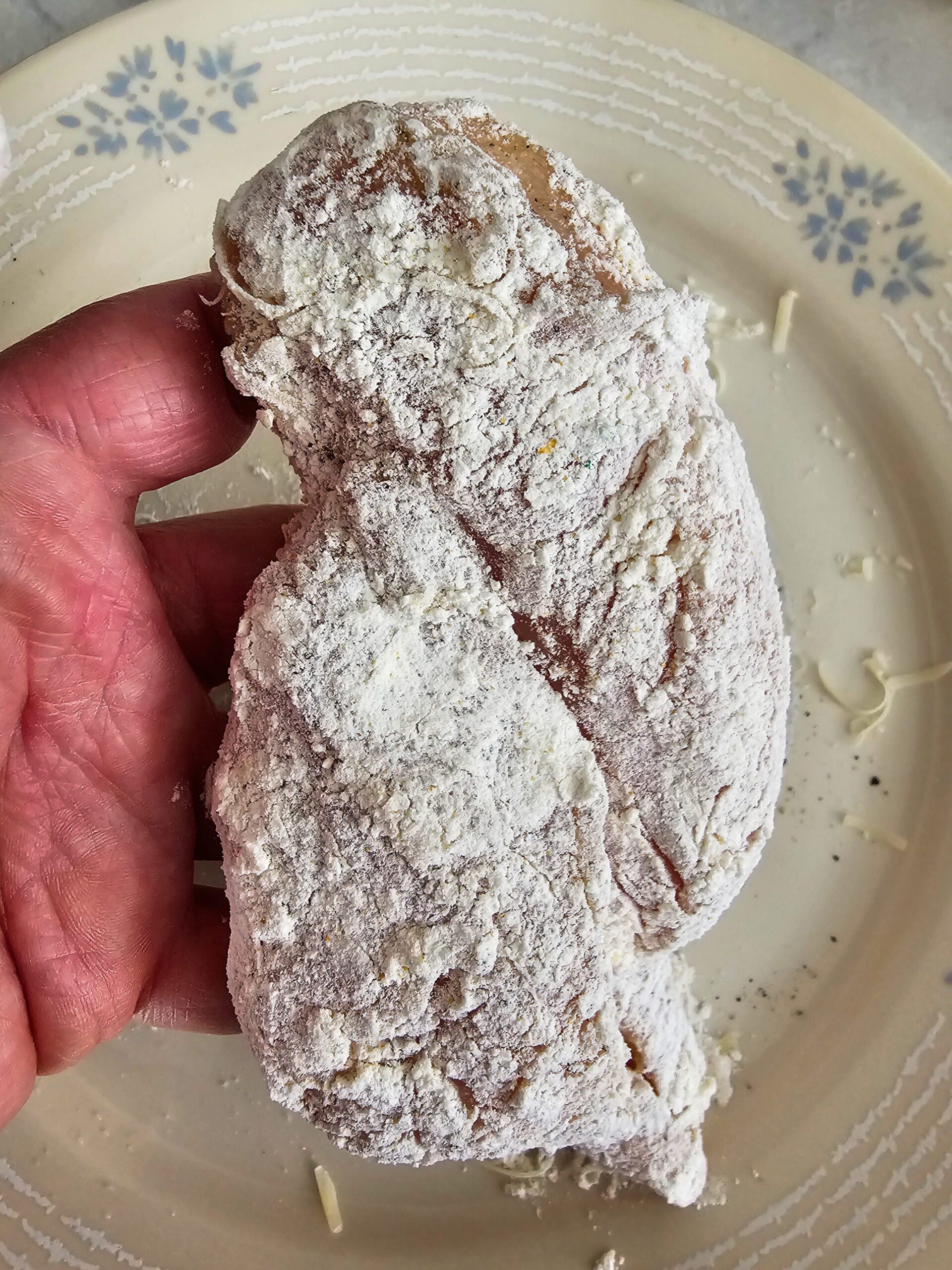
Slice chicken breasts into thin, even cutlets. Season with salt and pepper, then lightly coat in flour. Shake off excess.

- Sear the chicken:
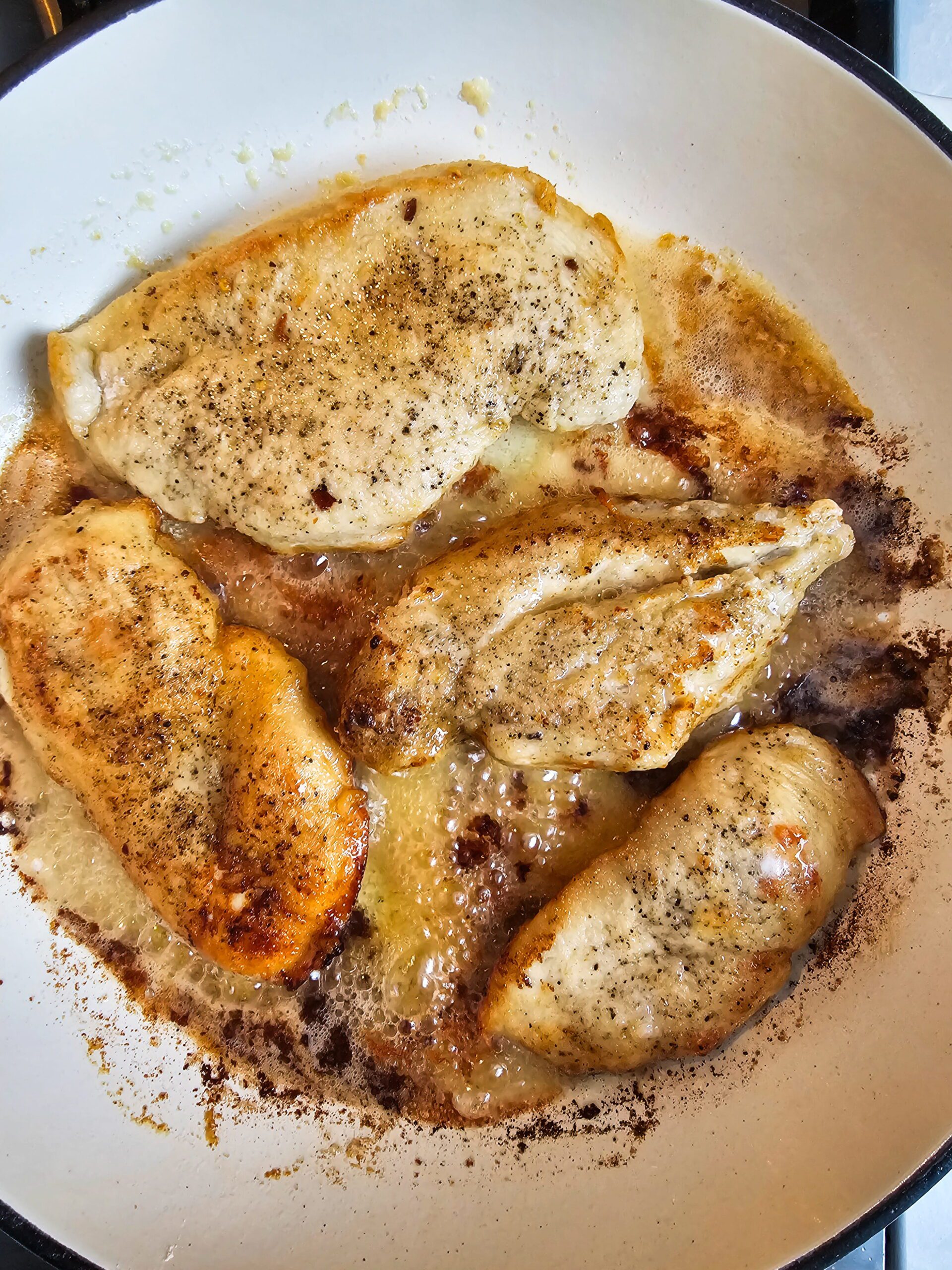
Heat olive oil and 1 tablespoon butter in a skillet over medium-high heat. Cook chicken 3–4 minutes per side until golden brown. Remove and set aside.
- Cook the garlic:
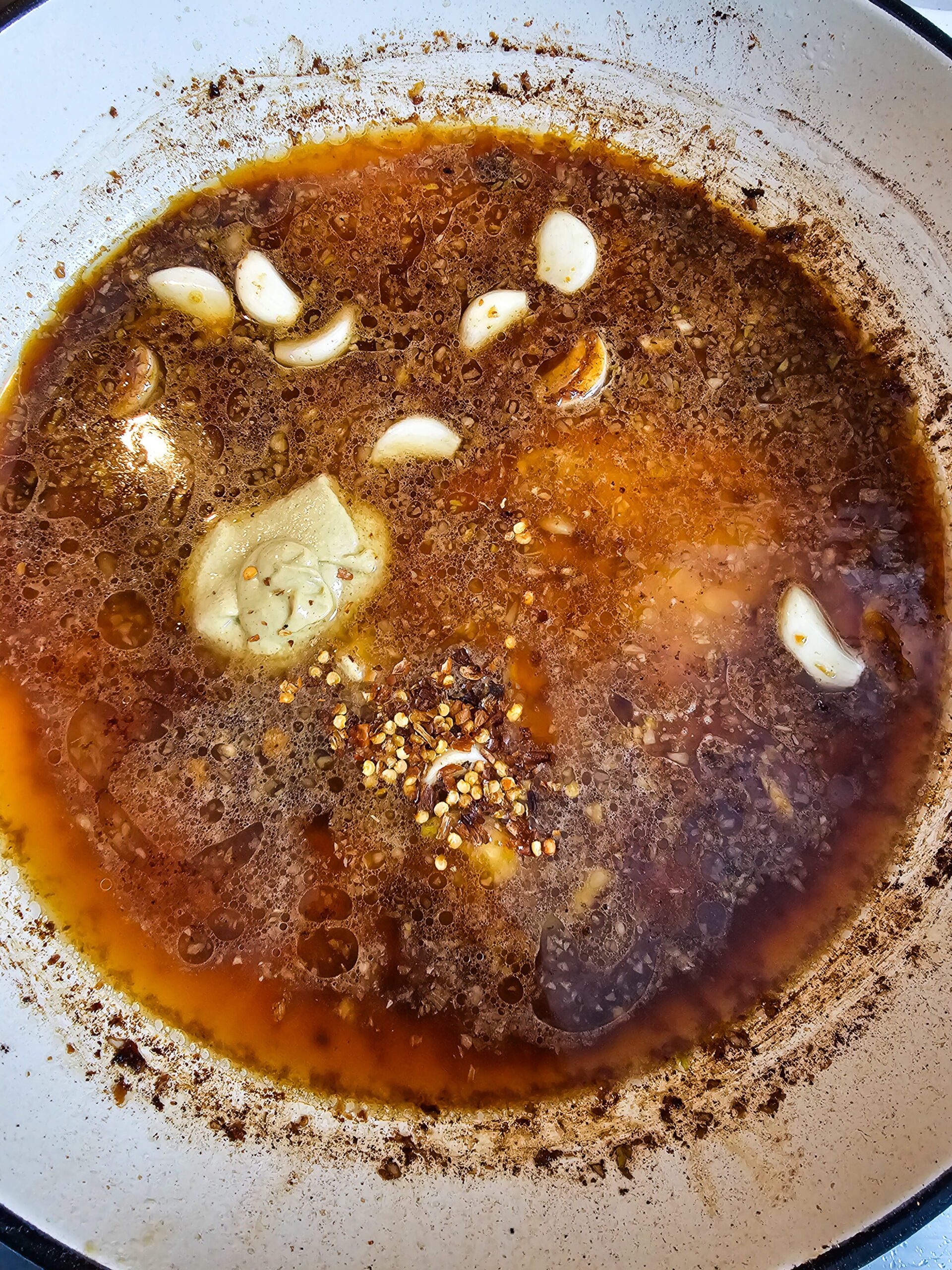
Reduce the heat to medium. Add the remaining 2 tablespoons of butter and whole garlic cloves. Cook 6–8 minutes, stirring often, until soft and golden.
- Deglaze the pan:
Pour in chicken broth and scrape up any browned bits from the bottom of the skillet. Simmer 2–3 minutes.
- Make the sauce:
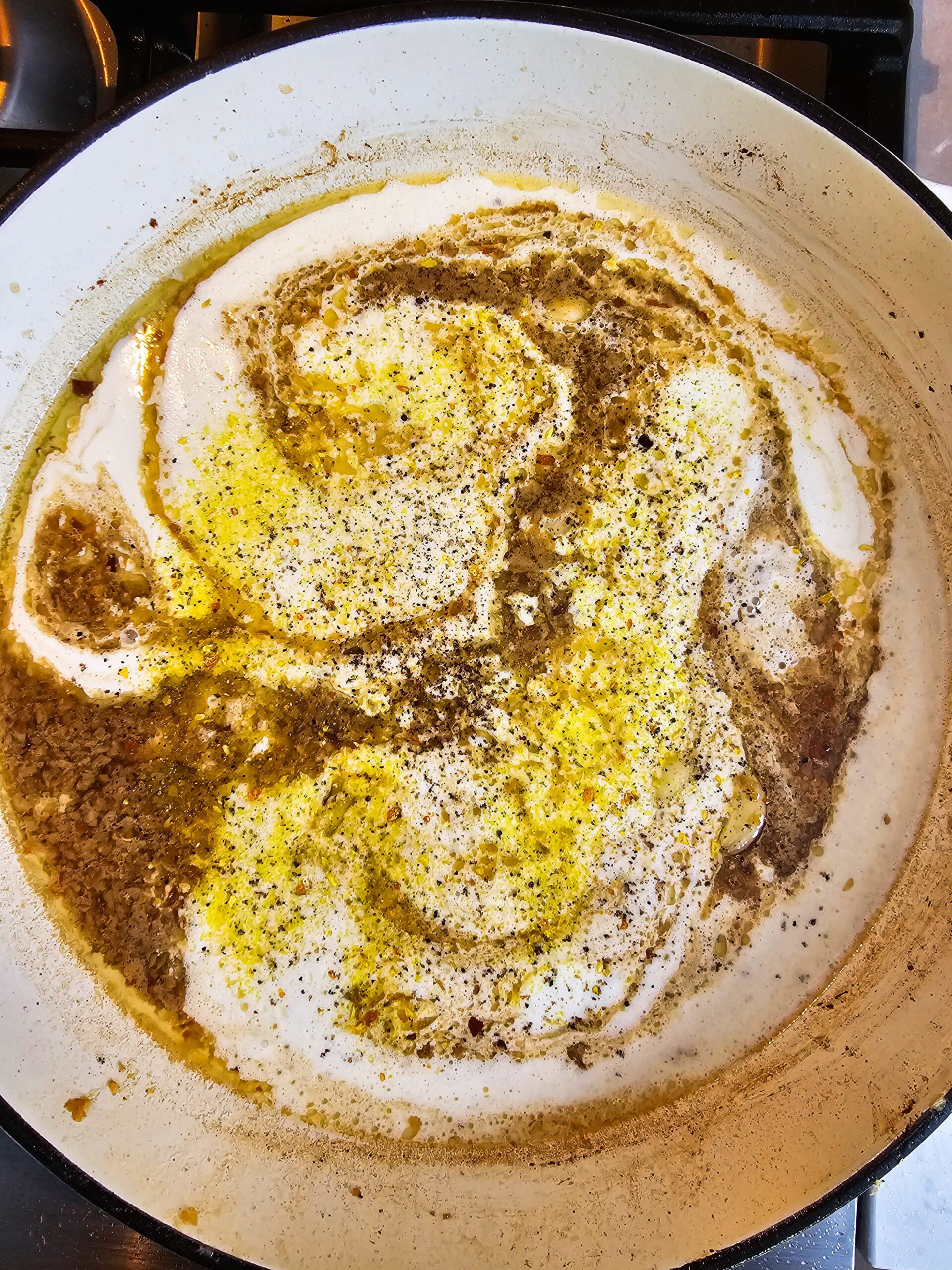
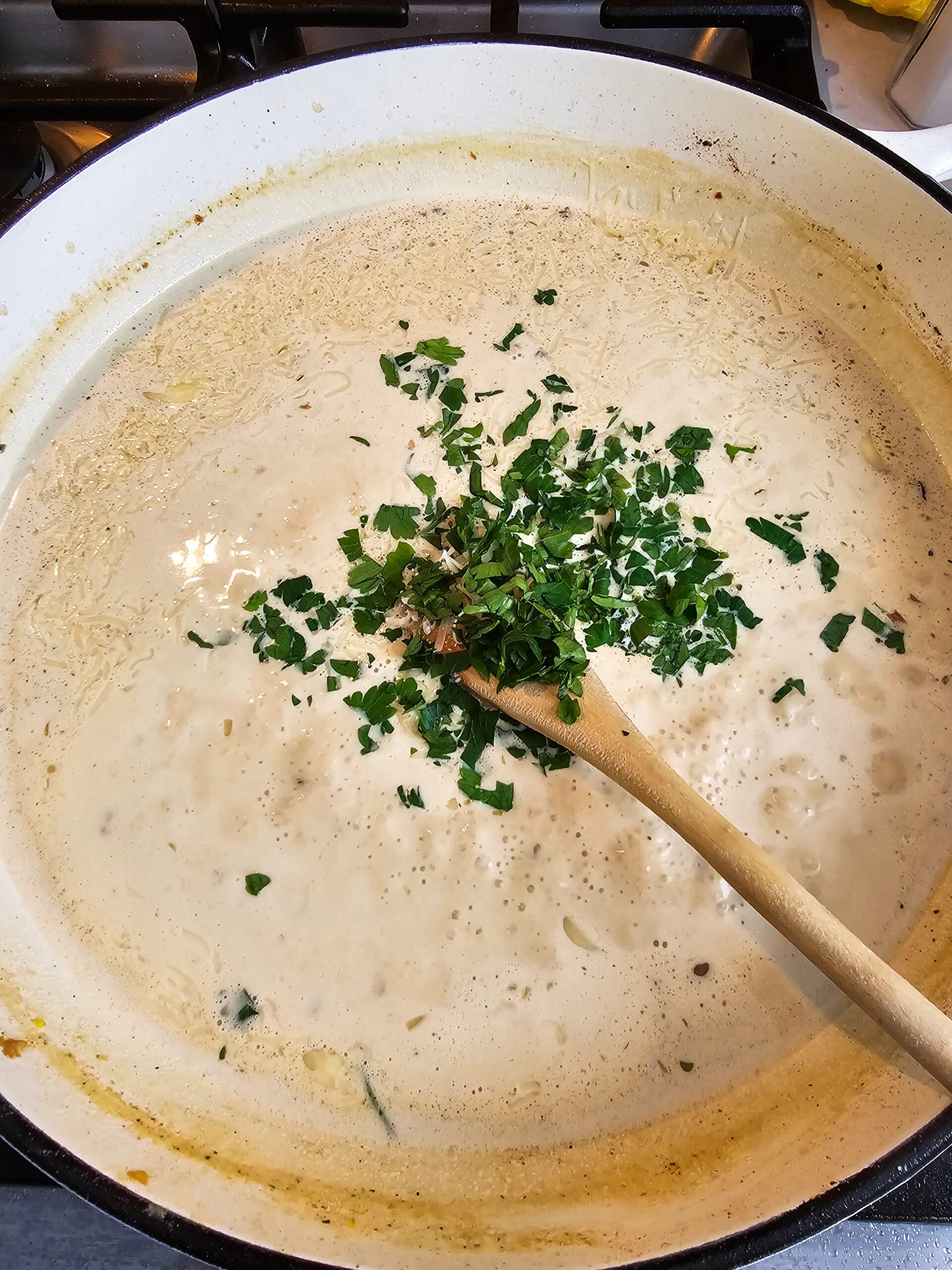
Stir in cream, garlic powder, and lemon juice. Add Dijon mustard or red pepper flakes if using. Simmer 5–7 minutes until slightly thickened. Stir in Parmesan now if using.
- Finish the dish:
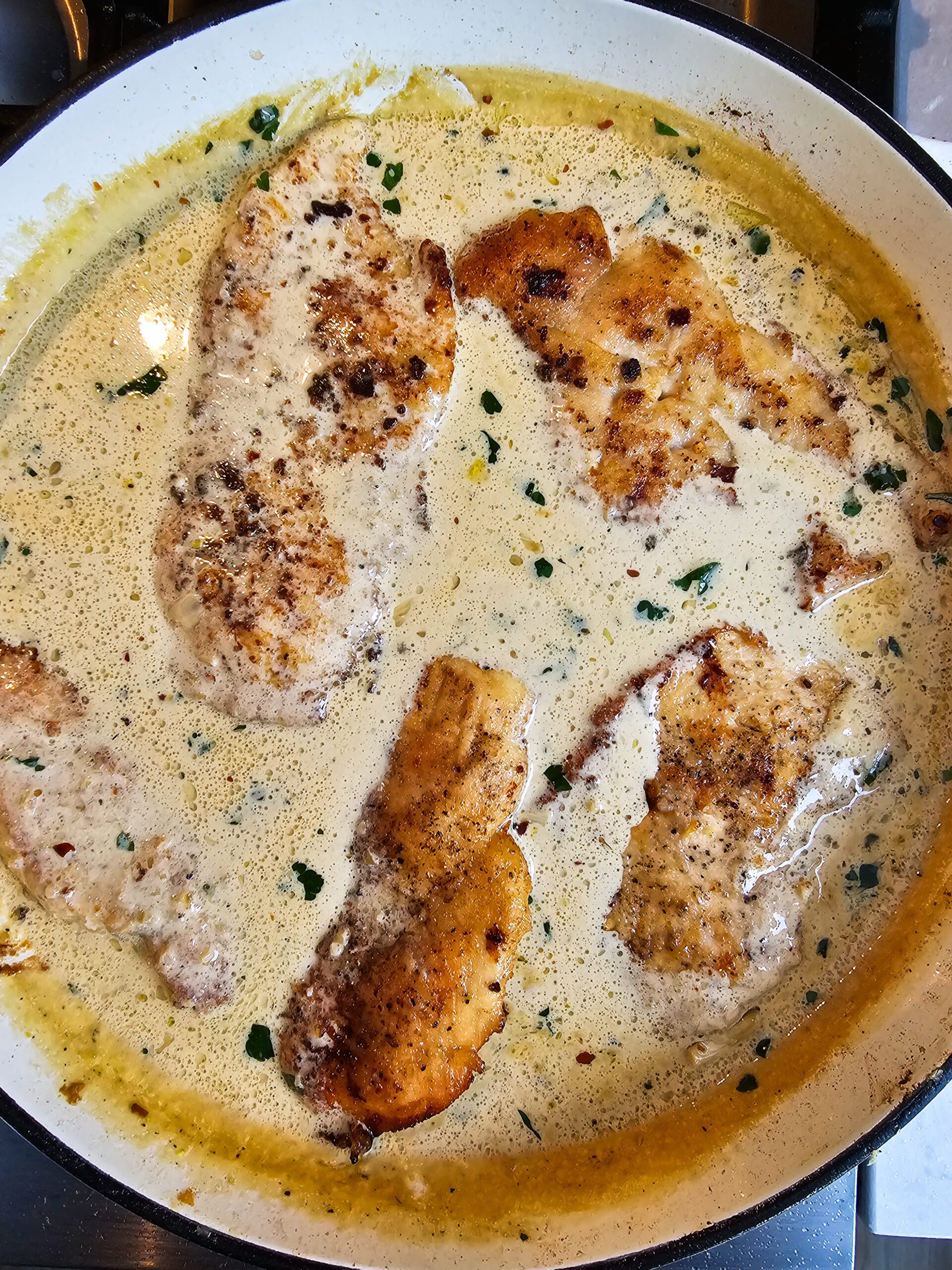
Return chicken to the skillet. Spoon sauce over the top and simmer 5 minutes, until chicken is cooked through and coated in sauce.
- Serve:
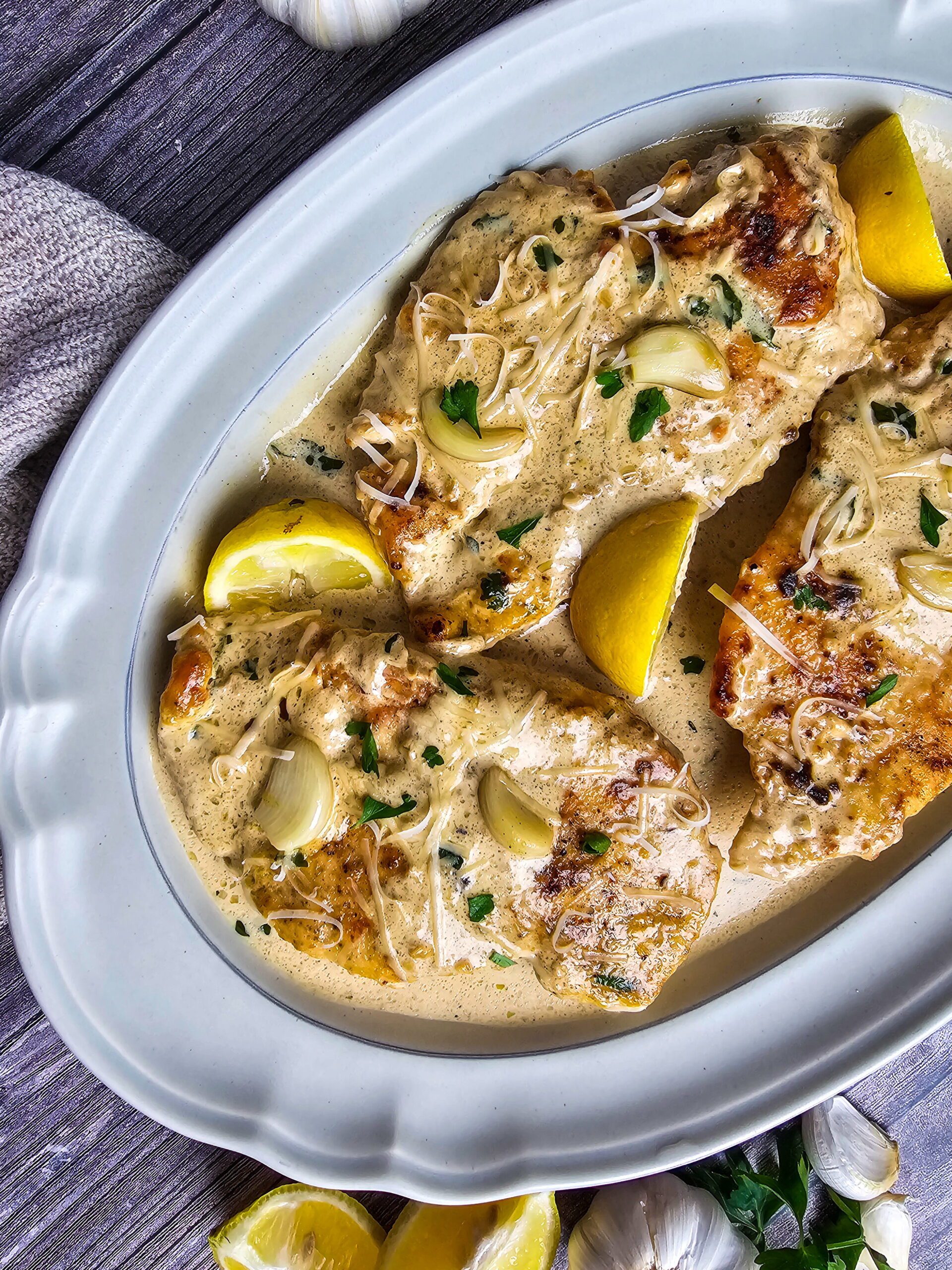
Sprinkle with parsley. Taste and adjust salt, pepper, or lemon juice as needed.
FAQ – FREQUENTLY ASKED QUESTIONS
Whole garlic cloves cooked slowly in butter caramelize rather than burn, which transforms their flavor from sharp and pungent to sweet, golden, and nutty. Minced garlic cooks too quickly, can burn easily, and never develops that mellow depth. The whole cloves also become soft enough to eat as part of the dish, and each bite of a caramelized clove is one of the best parts of this recipe.
Yes, and many people prefer thighs for their extra richness and juiciness. Boneless skinless chicken thighs work perfectly in this recipe. You do not need to slice them into cutlets — cook them whole for 5 to 6 minutes per side until golden and cooked through. The rest of the recipe stays exactly the same.
Dijon mustard acts as an emulsifier that holds the cream sauce together and prevents it from breaking or becoming greasy. It also rounds out the acidity of the lemon juice and adds a subtle background complexity that makes the sauce taste more developed without tasting like mustard. If you are sensitive to mustard, start with half a teaspoon — you will not taste it directly but you will notice the difference in the sauce.
Yes. Half and half works and produces a lighter, thinner sauce. For a dairy-free version, full-fat coconut cream is the best substitute and adds a very subtle sweetness that works well with the garlic. Avoid low-fat milk as the sauce is likely to break when it reduces. If using half and half, add an extra teaspoon of flour to help the sauce thicken properly.
There are two common reasons. The first is that the heat was too low during the reduction phase — the sauce needs a gentle simmer, not just a warm temperature, to reduce and thicken. The second is that the pan was overcrowded during the chicken searing step, which causes the chicken to steam and release liquid into the pan rather than sear. Always cook chicken in batches and make sure the sauce simmers actively for the full 5 to 7 minutes before returning the chicken.
Yes. The chicken and sauce reheat well. Store in an airtight container in the fridge for up to 3 days. To reheat, warm gently in a skillet over medium-low heat with a small splash of chicken broth to loosen the sauce. Avoid high heat when reheating as it can cause the cream sauce to break and the chicken to toughen.
A dry white wine works best. Chardonnay is the natural pairing since the buttery, oaky notes complement the cream sauce. Pinot Grigio is a lighter option that works well if you prefer something less rich. You can also add a small splash of the same white wine to the sauce when deglazing instead of or in addition to the chicken broth for extra depth.
The cloves should be golden brown on the outside, completely soft when pressed with a spoon, and smell sweet and nutty rather than sharp. If they smell sharp or slightly bitter, they need more time. If they are dark brown or black on any side, the heat is too high. The process should take 6 to 8 minutes over medium heat — do not rush it by turning up the heat or you will get bitter burned garlic rather than sweet caramelized garlic.
Tips for the Perfect Creamy Garlic Chicken Skillet
Never Rush the Garlic
This is the single step that separates this recipe from every basic version. Medium heat only, 6 to 8 full minutes, stirring often. Low and slow builds sweetness and that golden caramelized color. High heat burns the outside while leaving the inside raw and bitter, which will ruin the entire sauce. If your garlic is browning in under 3 minutes, your heat is too high — pull it back immediately.
Slice Your Chicken Evenly
Thick uneven cutlets are the main reason homemade creamy chicken disappoints. The thin pieces overcook while the thick pieces stay raw, and nothing sears properly. Slice each breast into two even cutlets of equal thickness, or place between plastic wrap and pound gently to even them out. Even thickness means even searing and even cooking all the way through. Always verify your chicken has reached an internal temperature of 165°F — the USDA recommended safe minimum for poultry.
Respect the Fond and the Simmer
Those browned bits stuck to the pan after searing are concentrated flavor — scrape every last one up when you deglaze. Do not skip this step and do not wipe the pan clean between steps. After adding the cream, keep the heat at a gentle simmer, never a boil. Boiling a cream sauce causes it to separate and turn greasy. Gentle bubbling for 5 to 7 minutes is all it needs to thicken properly. Add the Parmesan at the very end off the heat so it melts smoothly rather than clumping.
Substitutions and Variations for This Creamy Garlic Chicken Skillet
- Chicken thighs instead of breasts: A great swap for extra juiciness and richer flavor. Cook whole for 5–6 minutes per side instead of slicing into cutlets.
- Dairy-free option: Replace heavy cream with full-fat coconut cream and skip Parmesan or use a dairy-free alternative. The garlic still carries the flavor of the sauce.
- No Dijon mustard: Use 1 teaspoon Worcestershire sauce for similar depth and savory balance without a mustard taste.
- Lighter sauce option: Swap heavy cream for half and half, and add ½ teaspoon extra flour before deglazing to help thicken the sauce.
- Gluten-free option: Use rice flour or a gluten-free flour blend instead of all-purpose flour for dredging and thickening.
- One-pan meal upgrade: Add a handful of fresh spinach or baby kale in the last 2 minutes to wilt into the sauce.
- Extra flavor add-in: Sauté sliced mushrooms after cooking the chicken and before adding garlic for a deeper, earthy flavor.
What to Serve With Restaurant Style Creamy Garlic Chicken Skillet?
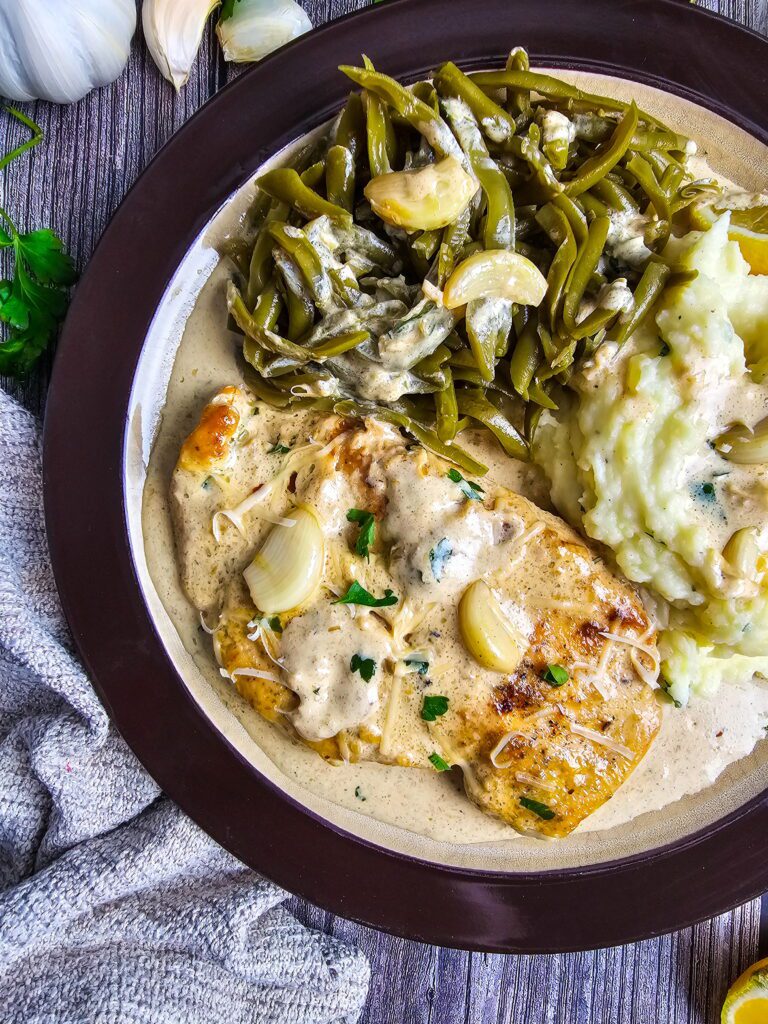
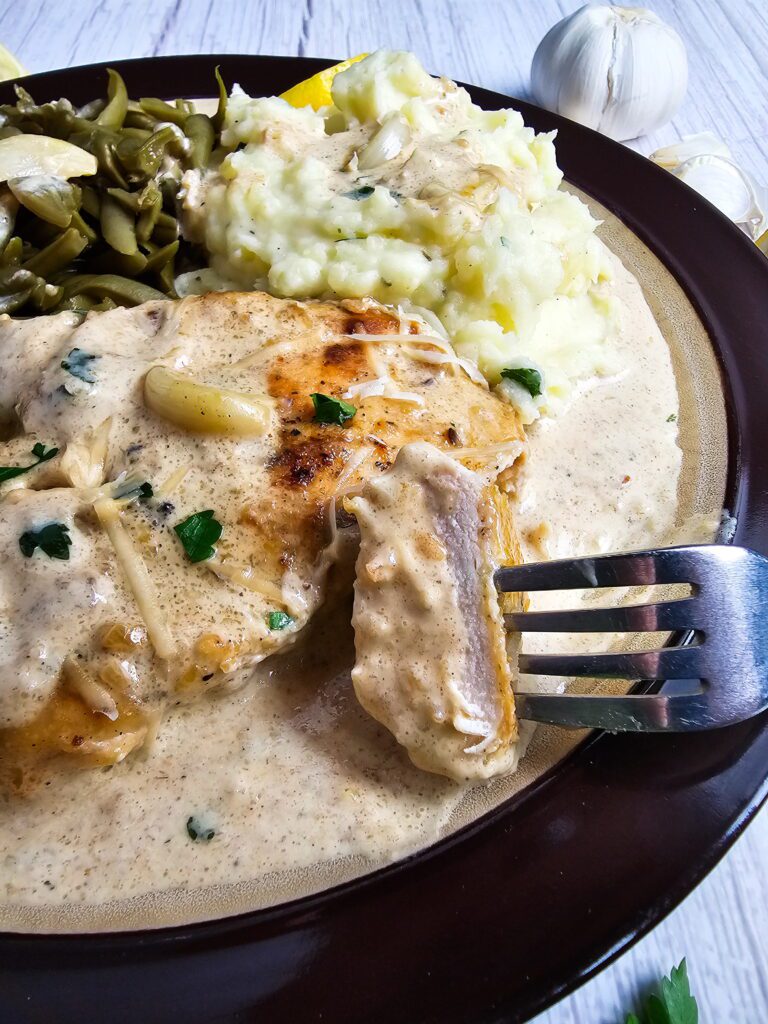
The sauce in this dish is too good to waste, so pair it with something that soaks it up properly. Mashed potatoes are the obvious choice, and they are obvious for good reason — the creamy garlic sauce pools into the potatoes, and every bite is better than the last. Egg noodles or pappardelle pasta are equally good and turn this into a heartier dinner. For a lower-carb option, cauliflower mash works beautifully, and the rich sauce masks any difference from the real thing.
For vegetables, roasted green beans or asparagus add a crisp contrast to the richness of the sauce. Sautéed spinach wilted directly into the sauce at the end is another option that adds color and nutrition without adding any work. And always have crusty bread on the table — the sauce is worth every calorie of a good sourdough slice.
Storage and Reheating Your Creamy Garlic Chicken Skillet
Store leftovers in an airtight container in the refrigerator for up to 3 days. The flavors actually deepen overnight as the chicken sits in the sauce. To reheat, add the portion to a skillet over medium-low heat with a small splash of chicken broth to loosen the sauce. Stir gently and heat through over low heat — avoid high heat as it will cause the cream sauce to separate and toughen the chicken. The microwave works in a pinch at 50 percent power in 30-second intervals, stirring between each.
Can This Be Frozen?
Yes, with one note. Cream-based sauces can separate slightly after freezing and thawing because the fat and liquid components behave differently when frozen. To freeze, let the dish cool completely and store in freezer-safe airtight containers for up to 2 months. Thaw overnight in the refrigerator and reheat slowly in a skillet over low heat, whisking gently as it warms. Adding a small splash of fresh cream while reheating helps bring the sauce back to its original silky texture.
Looking for more chicken breast dinners? Try these?
Creamy Sun-Dried Tomato Chicken (Marry Me Chicken)
The sauce that supposedly inspired proposals, built around sun-dried tomatoes and Parmesan in a creamy skillet — a natural companion to this garlic chicken for anyone who loves restaurant-style one-pan dinners.
A one-pan skillet dinner with bold ranch flavor in a rich cream sauce, perfect for nights when you want maximum flavor with minimal effort.
Indulge in Creamy Chicken Riesling
White wine and cream come together with tender chicken in a sophisticated sauce that makes an elegant weeknight dinner.
Zesty Lemon Chicken Piccata Made Easy
Bright lemon and caper butter sauce over golden seared chicken, the lighter counterpart to this rich garlic cream version.
Final Thoughts
This creamy garlic chicken skillet isn’t just another weeknight dinner—it’s a restaurant-style upgrade built from simple pantry ingredients. The slow-cooked garlic, deglazed pan, and balanced cream sauce are what turn it from basic to unforgettable.
If you’ve only ever made quick “30-second garlic” skillet chicken before, this version will feel like a completely different recipe. It’s richer, deeper, and more balanced without adding extra complexity or time.
Once you make it this way, it becomes one of those “saved forever” dinner recipes you come back to again and again.
Restaurant Style Creamy Garlic Chicken Skillet (Better Than Any Takeout Version)
Equipment
Ingredients
- 3 chicken breasts sliced into 6 thin cutlets
- salt & freshly ground black pepper
- ½ cup flour (for dredge)
- 1 ½ tablespoons olive oil
- 3 tablespoons butter divided
Sauce Ingredients:
- 10 cloves garlic (peeled)
- ⅔ cup chicken broth
- 1 teaspoon lemon juice increased for balance
- ½ teaspoon garlic powder
- 1 ¼ cups heavy cream
- 2 tablespoons parsley (chopped)
- ¼ cup Parmesan (freshly grated)
- ¼ teaspoon red pepper flakes
- 1 teaspoon Dijon mustard
Instructions
- Prep the chicken: Slice chicken breasts into thin, even cutlets. Season with salt and pepper, then lightly coat in flour. Shake off excess.
- Sear the chicken: Heat olive oil and 1 tablespoon butter in a skillet over medium-high heat. Cook chicken 3–4 minutes per side until golden brown. Remove and set aside.
- Cook the garlic: Reduce heat to medium. Add remaining 2 tablespoons butter and whole garlic cloves. Cook 6–8 minutes, stirring often, until soft and golden.
- Deglaze the pan: Pour in chicken broth and scrape up any browned bits from the bottom of the skillet. Simmer 2–3 minutes.
- Make the sauce: Stir in cream, garlic powder, and lemon juice. Add Dijon mustard or red pepper flakes if using. Simmer 5–7 minutes until slightly thickened. Stir in Parmesan now if using.
- Finish the dish: Return chicken to the skillet. Spoon sauce over the top and simmer 5 minutes, until chicken is cooked through and coated in sauce.
- Serve: Sprinkle with parsley. Taste and adjust salt, pepper, or lemon juice as needed.