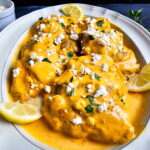
Roasted Red Pepper Chicken Thighs with Creamy Goat Cheese Sauce (Low Carb)
These low carb chicken thighs in roasted red pepper cream sauce deliver golden pan-seared chicken in a silky, smoky sauce made from scratch with real charred peppers, heavy cream, and tangy goat cheese. The sauce is balanced with smoked paprika, chicken broth, and lemon juice for a rich result that never feels heavy. Naturally keto-friendly, ready in under 45 minutes, and significantly better than any version made with jarred peppers.
Servings: 4 servings
Calories: 512kcal
Equipment
Ingredients
For the Chicken:
- 1½ pounds boneless skinless chicken thighs
- 1 tablespoon coconut oil or olive oil
- 1 teaspoon kosher salt
- ½ teaspoon black pepper
- 4 ounces goat cheese crumbled
- 2 tablespoons fresh parsley chopped
Roasted Red Pepper Cream Sauce:
- 3 red bell peppers
- 3 cloves garlic
- 2 tablespoons olive oil
- ½ cup heavy cream
- ¼ cup chicken broth
- ½ teaspoon smoked paprika
- 1 teaspoon lemon juice or white wine vinegar
- salt and pepper to taste
Instructions
- Roast the Peppers: Preheat your oven to 450 degrees. Place the whole red bell peppers directly on a sheet pan — no oil, no foil, just the raw peppers on the pan. Roast for 20 to 25 minutes, turning once halfway through, until the skins are blistered and beginning to char in spots. You want real color here. Pale, barely-roasted peppers do not develop the flavor you are after. The skin should be dark and pulling away from the flesh in places.
- Transfer the hot peppers to a bowl immediately after they come out of the oven and cover the bowl tightly with plastic wrap or a plate. Let them sit for 10 minutes. This is the steam step, and it is important — the trapped steam loosens the skin from the flesh, making it easy to peel. If you skip it and try to peel them while they are just out of the oven, the skin tears and you lose flesh with it.
- After 10 minutes, peel off the skins — they should slip off with very little effort. Remove the stems and seeds and roughly chop the flesh. Do not worry about getting every piece of charred skin off. A few bits of char in the sauce add flavor rather than detracting from it.
- Season and Sear the Chicken: Pat the chicken thighs completely dry with paper towels. This step is not fussy — it is functional. Wet chicken does not sear, it steams, and you will not get the golden crust that makes this dish look and taste as good as it does. Season both sides generously with the kosher salt and black pepper.
- Heat the coconut oil or olive oil in a large skillet over medium heat until it shimmers. Add the chicken thighs smooth side down and do not touch them. Let them cook for 5 to 6 minutes undisturbed. Resist the temptation to check or move them. The chicken will release naturally from the pan when the crust has formed — if it is sticking, it is not ready. Flip and cook another 5 to 6 minutes until cooked through and golden on both sides.
- Remove the chicken from the skillet and set it aside on a plate. Leave the browned bits and any rendered fat in the pan. Those browned bits — the fond — are going to flavor your sauce base in the next step, and losing them by wiping the pan or deglazing too aggressively would be a waste.
- Build the Sauce Base: Reduce the heat to medium-low. Add 2 tablespoons of olive oil to the same skillet. Add the minced garlic and cook for about 30 seconds, stirring constantly, just until it becomes fragrant. You want the garlic to bloom in the oil without browning. Browned garlic turns bitter and will give the sauce an off note that no amount of cream will cover.
- Add the chopped roasted peppers and the chicken broth. Stir to combine and let the mixture simmer gently for 2 to 3 minutes. The broth will pick up the fond from the bottom of the pan — use your spoon to scrape those bits up as the liquid loosens them. This is where the fond goes from being a stuck residue to being an active flavor component in the sauce.
- Blend Until Silky: Carefully transfer the pepper and broth mixture to a blender. If you have an immersion blender you can use it directly in the pan, but a countertop blender will give you a smoother, silkier result. Blend on high until the sauce is completely smooth with no visible pepper chunks. The color at this point should be a vivid, deep orange-red. If it looks pale or pinkish, your peppers needed more roasting time.
- Be careful when blending hot liquids. If you are using a standard blender, fill it no more than halfway, hold a folded kitchen towel over the lid, and start on low before increasing speed. Steam pressure builds quickly with hot liquids and a loose lid will cover your ceiling in red pepper sauce.
- Finish the Cream Sauce: Return the blended sauce to the skillet over medium-low heat. Add the heavy cream, smoked paprika, and lemon juice. Stir to combine and let the sauce simmer gently for 3 to 4 minutes, stirring occasionally, until it thickens slightly and the color deepens. Do not let it boil hard — a gentle simmer is all you need and aggressive heat will break the cream.
- Taste the sauce at this point and adjust salt and pepper. This is also the moment to decide if you want more acid. Start with one teaspoon of lemon juice and taste before adding more. The sauce should taste rich and slightly smoky from the paprika, sweet from the peppers, and bright enough that the creaminess does not feel heavy.
- Bring It Together: Return the seared chicken thighs to the skillet and spoon the sauce generously over each piece. Sprinkle the crumbled goat cheese evenly over the top of the chicken and sauce. Cover the pan and let everything cook together over medium-low heat for 2 to 3 minutes. The goat cheese will soften and partially melt, the sauce will thicken slightly more as it reduces around the chicken, and the flavors will meld.
- Finish and Serve: Remove the lid, scatter the chopped fresh parsley over the top, and serve immediately. The dish looks best served directly from the skillet at the table — the deep red sauce against the golden chicken and the white goat cheese is genuinely beautiful and requires no additional styling.
Nutrition
Calories: 512kcal | Carbohydrates: 7g | Protein: 46g | Fat: 33g | Saturated Fat: 17g | Polyunsaturated Fat: 2g | Monounsaturated Fat: 12g | Trans Fat: 0.03g | Cholesterol: 149mg | Sodium: 1136mg | Potassium: 897mg | Fiber: 2g | Sugar: 5g | Vitamin A: 3817IU | Vitamin C: 118mg | Calcium: 86mg | Iron: 3mg