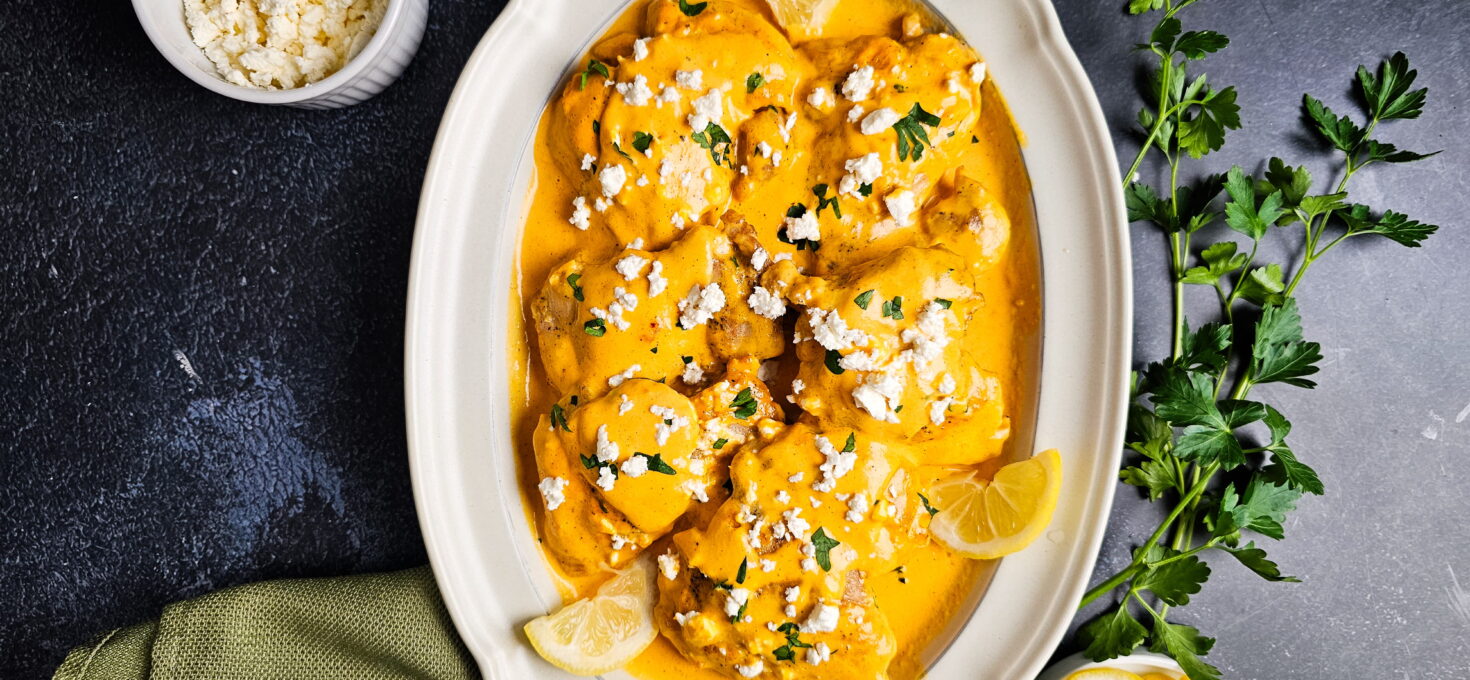
This low carb chicken thighs recipe features golden-seared boneless thighs served in a silky roasted red pepper cream sauce made from real charred peppers, heavy cream, garlic, and smoked paprika, finished with tangy goat cheese and fresh parsley. It works because roasting the peppers from scratch develops a natural sweetness that jarred peppers cannot replicate, and a small amount of lemon juice balances the richness of the cream so the sauce tastes bright rather than heavy. The entire dish comes together in under 45 minutes and contains no added starches, making it naturally low-carb and keto-friendly.
Roasted Red Pepper Chicken Thighs with Creamy Goat Cheese Sauce (Low Carb)
If you have been looking for a low carb chicken thighs recipe that actually delivers restaurant-level flavor without the starch, the refined flour, or the jarred shortcuts, this is the one. Golden pan-seared chicken thighs in a silky roasted red pepper cream sauce with goat cheese and smoked paprika — it looks impressive, it tastes deeply satisfying, and every component is there for a reason. This is not another cream sauce recipe where you dump in a jar of peppers and call it done. It is the version you make once and then cannot stop thinking about.
I landed on this recipe after getting frustrated with every roasted red pepper chicken dish I tried that came out either too sweet, too heavy, or completely flat. The jarred pepper versions always tasted like something was missing. The cream-heavy versions felt like the sauce was fighting the chicken instead of working with it. The fix turned out to be three things most recipes skip entirely: real roasted peppers, an acid component to cut the richness, and goat cheese as a finish instead of mozzarella or Parmesan. Once those elements clicked into place the dish became something I genuinely wanted to eat on a Tuesday night rather than just photograph and move on from.
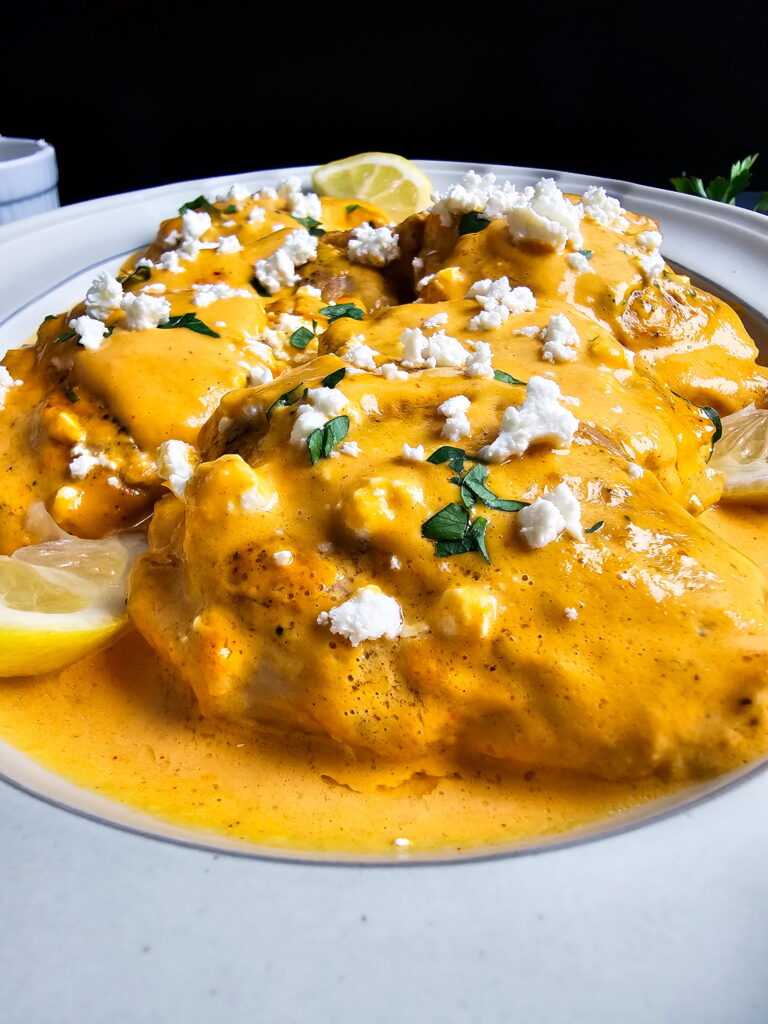
What are Chicken Thighs in Roasted Red Pepper Cream Sauce?
This low carb chicken thighs recipe features golden-seared boneless thighs served in a silky roasted red pepper cream sauce made from real charred peppers, heavy cream, garlic, and smoked paprika, finished with tangy goat cheese and fresh parsley. It works because roasting the peppers from scratch develops a natural sweetness that jarred peppers cannot replicate, and a small amount of lemon juice balances the richness of the cream so the sauce tastes bright rather than heavy. The entire dish comes together in under 45 minutes and contains no added starches, making it naturally low carb and keto-friendly.
Why This Red Pepper Chicken Thighs Recipe Actually Works?
Most recipes for chicken in roasted red pepper sauce have the same problem: the sauce is sweet and heavy with no counterbalance, and it coats the chicken like a blanket rather than complementing it. The root cause is almost always a combination of jarred peppers, too much cream, and no acid. Fixing all three at once is what separates this recipe from everything else in this category.
Why Real Roasted Peppers Matter
Roasting the peppers yourself is not optional here — it is the whole point. This flavor transformation is driven by the same caramelization process that makes roasted vegetables broadly more complex than their raw counterparts. The skin blisters and releases, the flesh softens into something almost silky, and the flavor shifts from raw and slightly grassy to deeply sweet and slightly smoky. A jar of roasted peppers is preserved in brine or citric acid and the flavor has been muted and flattened by that process. The difference in the finished sauce is not subtle. It is the difference between a sauce that tastes like it came from a can and one that tastes like it came from a restaurant that sources good ingredients.
What Chicken Broth Does to the Sauce
The chicken broth added to the sauce base serves two functions. It thins the blended pepper mixture enough to create the right consistency before the cream goes in, and it adds a savory depth that keeps the sauce from reading as too sweet once everything is combined. A pure pepper-and-cream sauce without any savory counterpoint can veer into dessert territory. The broth grounds it.
The Role of Acid in a Cream Sauce
The lemon juice — or white wine vinegar if that is what you have — is the most underrated element in the recipe. Cream sauces without acid taste flat and slightly cloying no matter how good the other components are. A single teaspoon of lemon juice added at the end of simmering lifts the whole sauce and makes every other flavor more distinct. It does not make the sauce taste lemony. It makes it taste like itself, only better.
Why Goat Cheese Instead of Parmesan
Goat cheese instead of the more common Parmesan or mozzarella finish is a deliberate choice. Goat cheese has a mild tanginess that reinforces the acid in the sauce and adds a creamy, slightly funky richness that pairs beautifully with the sweet pepper base. It melts gently when you cover the pan for the last two minutes and creates pockets of soft cheese distributed through the sauce. Parmesan would add salt and sharpness. Mozzarella would add stretch and blandness. Goat cheese adds character, and that is what this dish needs.
How to Make Red Pepper Chicken Thighs?
Time needed: 45 minutes
- Roast the Peppers
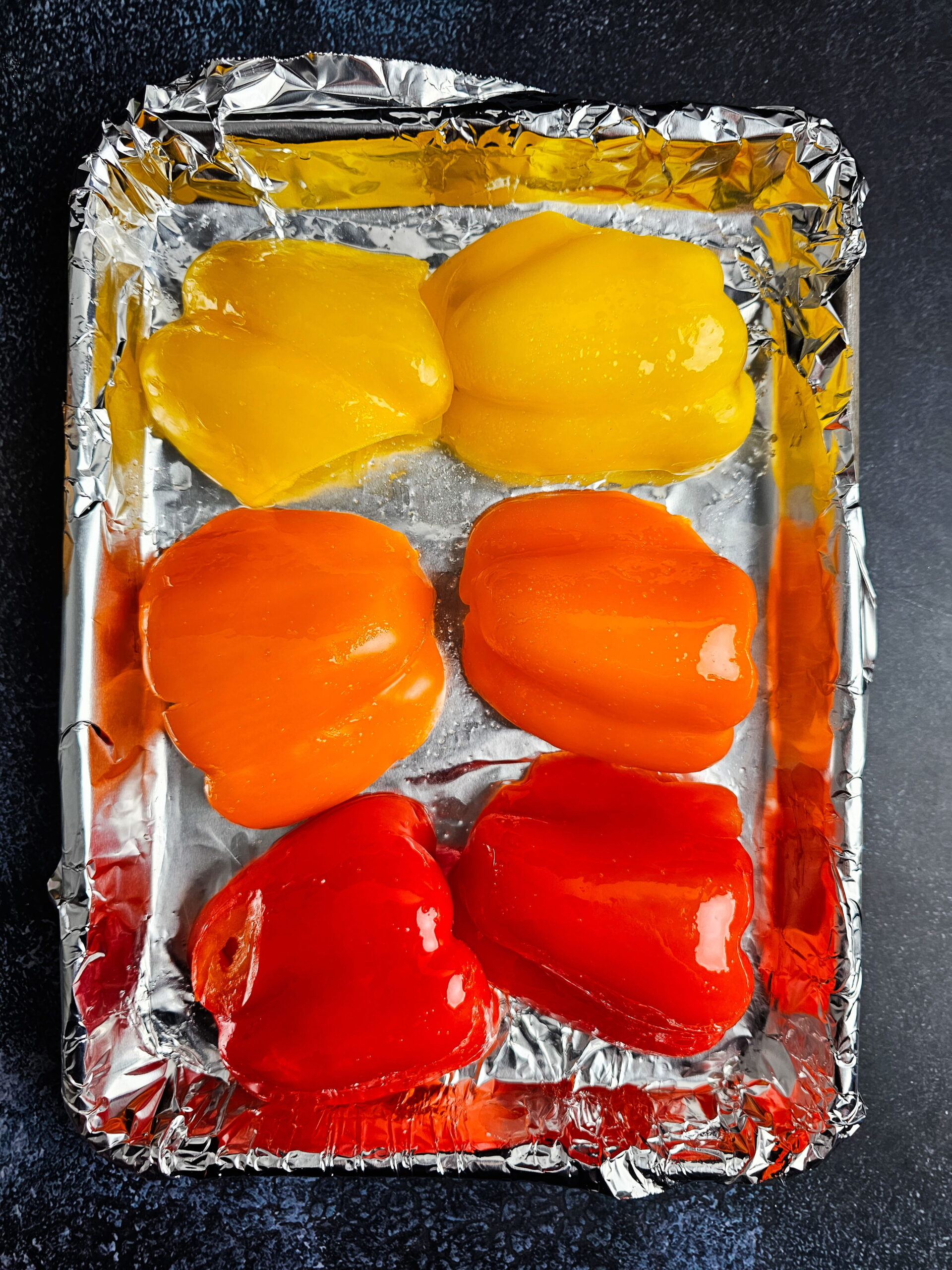
Preheat your oven to 450 degrees. Place the whole red bell peppers directly on a sheet pan — no oil, no foil, just the raw peppers on the pan. Roast for 20 to 25 minutes, turning once halfway through, until the skins are blistered and beginning to char in spots. You want real color here. Pale, barely-roasted peppers do not develop the flavor you are after. The skin should be dark and pulling away from the flesh in places.
Transfer the hot peppers to a bowl immediately after they come out of the oven and cover the bowl tightly with plastic wrap or a plate. Let them sit for 10 minutes. This is the steam step, and it is important — the trapped steam loosens the skin from the flesh, making it easy to peel. If you skip it and try to peel them while they are just out of the oven, the skin tears and you lose flesh with it.
After 10 minutes, peel off the skins — they should slip off with very little effort. Remove the stems and seeds and roughly chop the flesh. Do not worry about getting every piece of charred skin off. A few bits of char in the sauce add flavor rather than detracting from it.
- Season and Sear the Chicken
Pat the chicken thighs completely dry with paper towels. This step is not fussy — it is functional. Wet chicken does not sear, it steams, and you will not get the golden crust that makes this dish look and taste as good as it does. Season both sides generously with the kosher salt and black pepper.
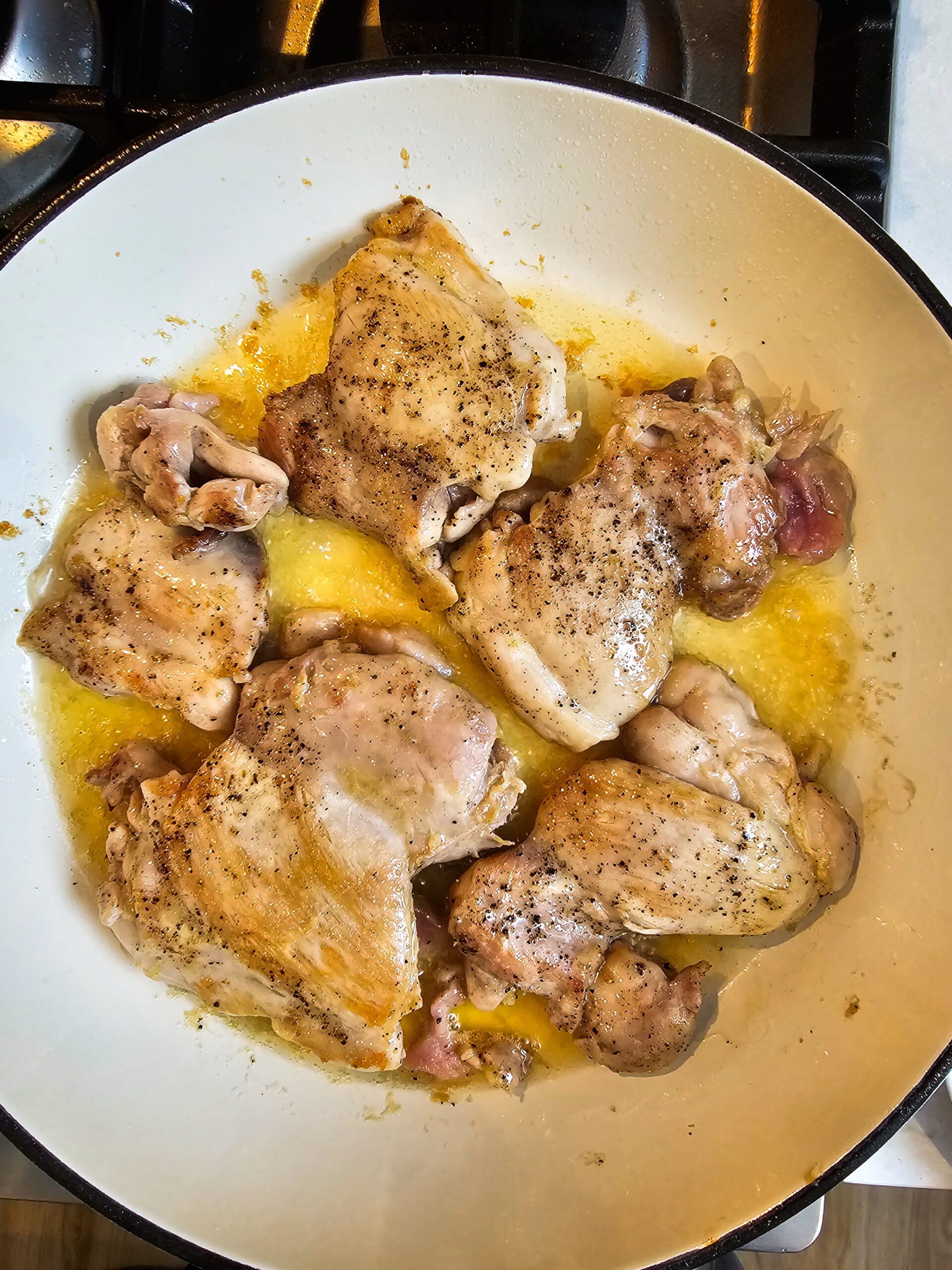
Heat the coconut oil or olive oil in a large skillet over medium heat until it shimmers. Add the chicken thighs smooth side down and do not touch them. Let them cook for 5 to 6 minutes undisturbed. Resist the temptation to check or move them. The chicken will release naturally from the pan when the crust has formed — if it is sticking, it is not ready. Flip and cook another 5 to 6 minutes until cooked through and golden on both sides.
Remove the chicken from the skillet and set it aside on a plate. Leave the browned bits and any rendered fat in the pan. Those browned bits — the fond — are going to flavor your sauce base in the next step, and losing them by wiping the pan or deglazing too aggressively would be a waste. - Build the Sauce Base
Reduce the heat to medium-low. Add 2 tablespoons of olive oil to the same skillet. Add the minced garlic and cook for about 30 seconds, stirring constantly, just until it becomes fragrant. You want the garlic to bloom in the oil without browning. Browned garlic turns bitter and will give the sauce an off note that no amount of cream will cover.
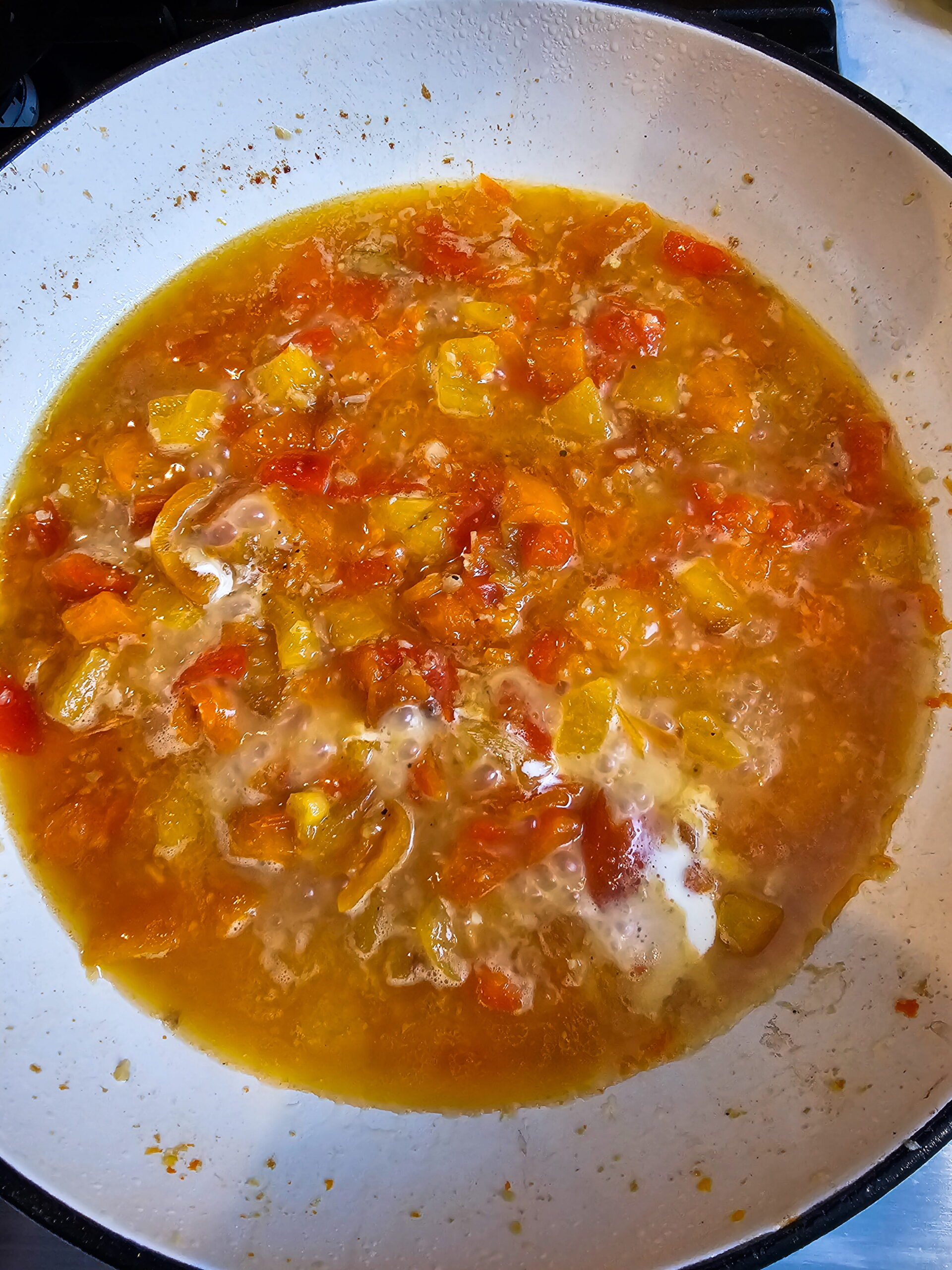
Add the chopped roasted peppers and the chicken broth. Stir to combine and let the mixture simmer gently for 2 to 3 minutes. The broth will pick up the fond from the bottom of the pan — use your spoon to scrape those bits up as the liquid loosens them. This is where the fond goes from being a stuck residue to being an active flavor component in the sauce. - Blend Until Silky
Carefully transfer the pepper and broth mixture to a blender. If you have an immersion blender you can use it directly in the pan, but a countertop blender will give you a smoother, silkier result. Blend on high until the sauce is completely smooth with no visible pepper chunks. The color at this point should be a vivid, deep orange-red. If it looks pale or pinkish, your peppers need more roasting time.
Be careful when blending hot liquids. If you are using a standard blender, fill it no more than halfway, hold a folded kitchen towel over the lid, and start on low before increasing speed. Steam pressure builds quickly with hot liquids and a loose lid will cover your ceiling in red pepper sauce. - Finish the Cream Sauce
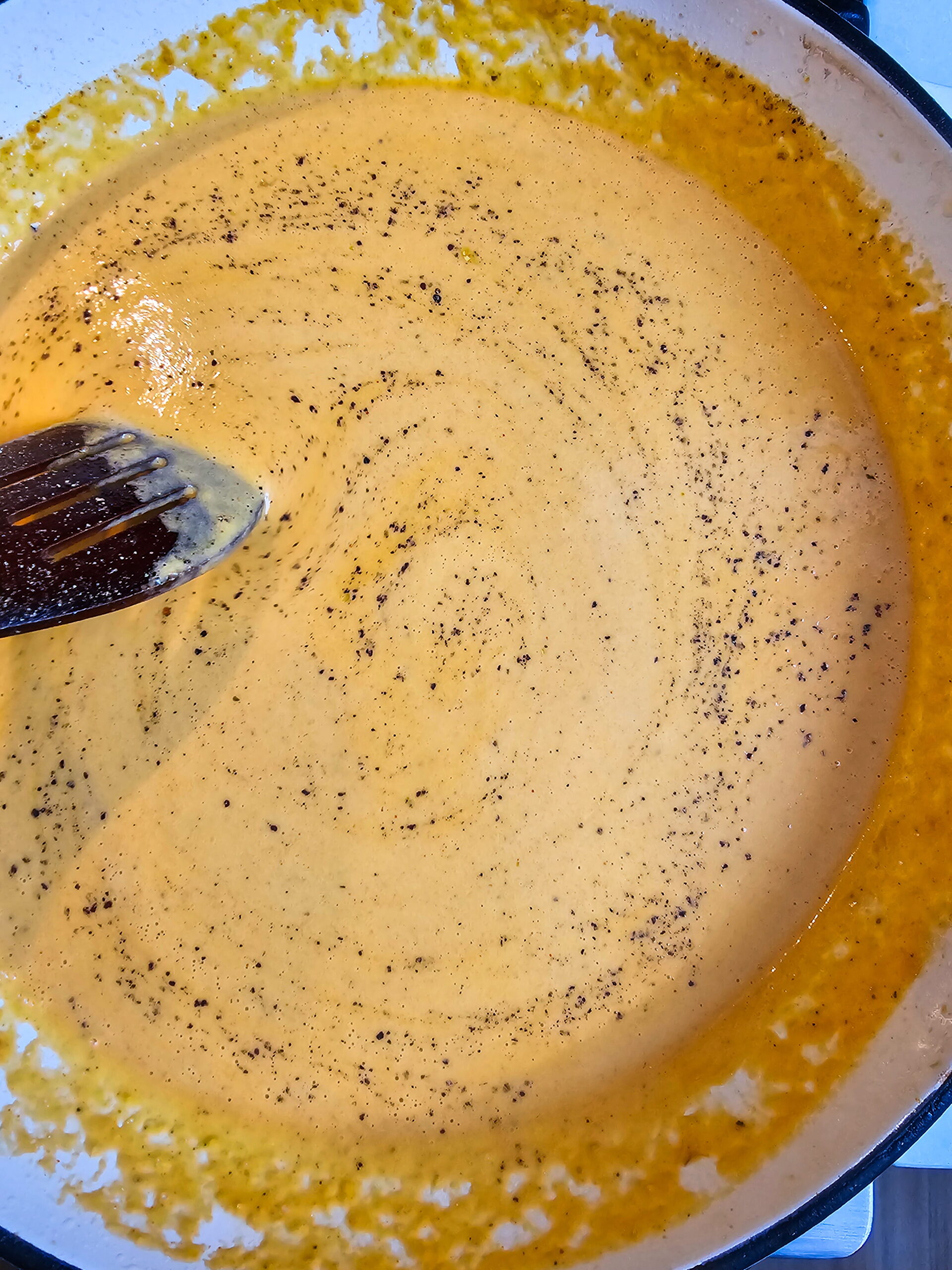
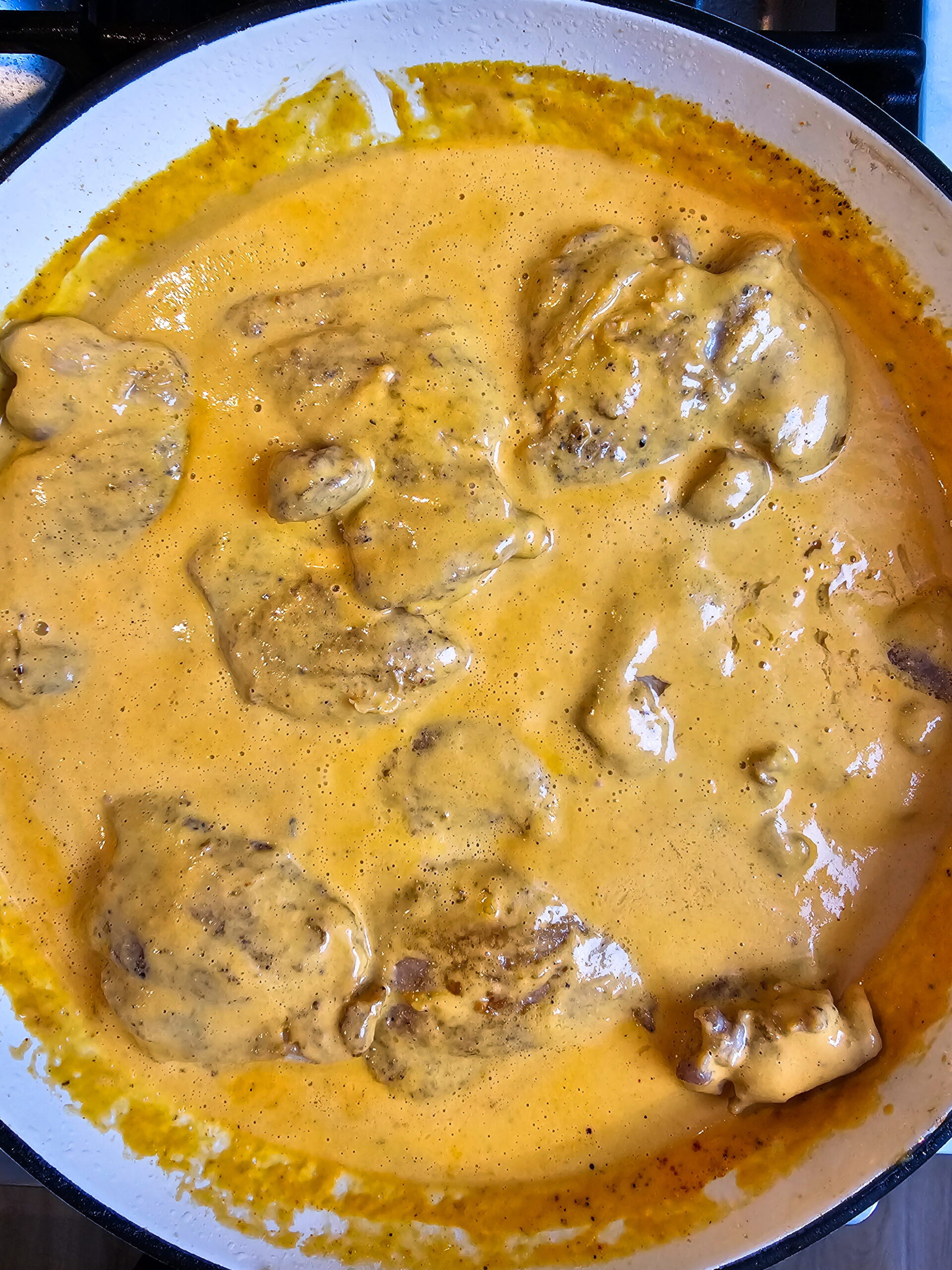
Return the blended sauce to the skillet over medium-low heat. Add the heavy cream, smoked paprika, and lemon juice. Stir to combine and let the sauce simmer gently for 3 to 4 minutes, stirring occasionally, until it thickens slightly and the color deepens. Do not let it boil hard — a gentle simmer is all you need and aggressive heat will break the cream.
Taste the sauce at this point and adjust salt and pepper. This is also the moment to decide if you want more acid. Start with one teaspoon of lemon juice and taste before adding more. The sauce should taste rich and slightly smoky from the paprika, sweet from the peppers, and bright enough that the creaminess does not feel heavy. - Bring It Together
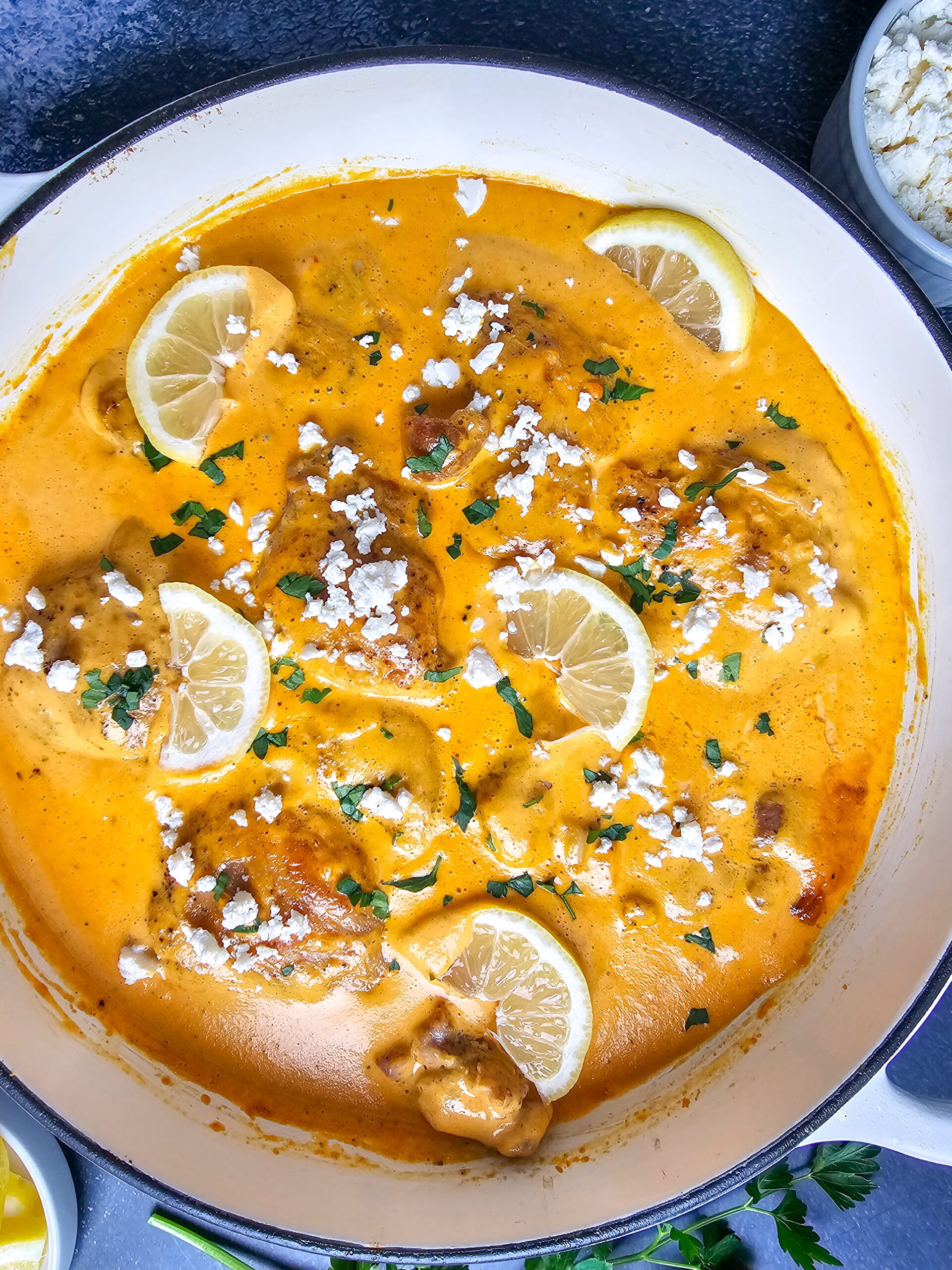
Return the seared chicken thighs to the skillet and spoon the sauce generously over each piece. Sprinkle the crumbled goat cheese evenly over the top of the chicken and sauce. Cover the pan and let everything cook together over medium-low heat for 2 to 3 minutes. The goat cheese will soften and partially melt, the sauce will thicken slightly more as it reduces around the chicken, and the flavors will meld.
- Finish and Serve
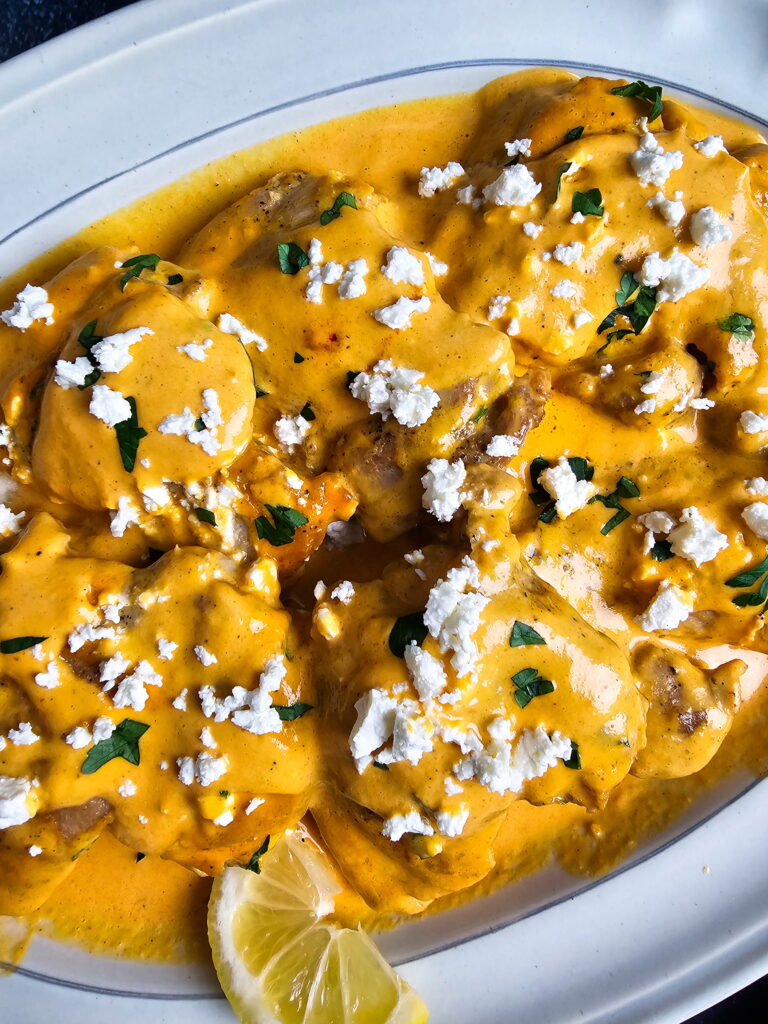
Remove the lid, scatter the chopped fresh parsley over the top, and serve immediately. The dish looks best served directly from the skillet at the table — the deep red sauce against the golden chicken and the white goat cheese is genuinely beautiful and requires no additional styling.
Tips for the Best Red Pepper Chicken Thighs
Don’t Pull the Peppers Too Early
Underdeveloped peppers are the single most common reason this type of sauce tastes flat. If your peppers are not visibly blistered and charred when they come out of the oven, put them back in for another five minutes. The char on the skin is flavor, and the steaming step loosens it without it going into the sauce.
Use a Thermometer — Thighs Are Forgiving but Not Foolproof
Chicken thighs are more forgiving than breasts when it comes to internal temperature, but you still want to cook them to 165 degrees. An instant-read thermometer is the most reliable tool here — the USDA recommends a minimum internal temperature of 165 degrees for all poultry
How to Fix a Broken Cream Sauce
If your sauce looks separated or broken after adding the cream, it almost always means the heat was too high. Remove the pan from the heat entirely, let it cool for a minute, and whisk vigorously. The emulsion will usually come back together. If it does not, a tablespoon of cold butter whisked in off heat will rescue it.
Smoked Paprika Is Not Optional Here
The smoked paprika versus regular paprika distinction matters more than it might seem. Regular paprika adds color and mild flavor. Smoked paprika adds color, mild flavor, and a background smokiness that echoes the char on the roasted peppers and creates a more complex, layered result. It is worth having the smoked version specifically for this recipe.
Substitutions and Variations
- Chicken breasts work in place of thighs but require more attention to avoid drying out. If you use breasts, pound them to an even thickness before cooking, reduce the sear time slightly, and pull them from the pan the moment they hit 165 degrees. The sauce will cover a multitude of cooking mistakes, but genuinely overcooked breast is hard to rescue.
- For a dairy-free version, replace the heavy cream with full-fat coconut cream. The flavor profile shifts slightly toward something with a tropical undertone, but the sauce still comes together beautifully, and the goat cheese can be replaced with a cashew-based soft cheese or simply omitted. The dish stands on its own without the cheese finish if needed.
- Jarred roasted red peppers can substitute for fresh in a time crunch — use one 12-ounce jar, drained and rinsed well. The sauce will be noticeably less complex and the natural sweetness will not be there, but it will still be a good weeknight dinner. If you go this route, bump the smoked paprika to three-quarters of a teaspoon to compensate for some of the lost roasted flavor.
- For extra heat, add a pinch of cayenne to the sauce along with the smoked paprika, or stir in a teaspoon of harissa paste when you add the cream. Harissa plays beautifully with the red pepper base and adds heat with additional complexity rather than just raw burn.
- Sun-dried tomatoes — about two tablespoons, roughly chopped — can be added to the sauce base before blending for a deeper, more umami-forward version. This is a variation worth trying if you want a sauce that leans richer and more savory than sweet.
Make-Ahead and Storage
The roasted red pepper cream sauce can be made up to three days ahead and stored in a sealed container in the refrigerator. Make the full sauce through the blending and cream-adding step, cool it completely, and refrigerate. When you are ready to cook, reheat the sauce gently in the skillet over medium-low heat before adding the seared chicken.
The chicken can be seared ahead of time as well and refrigerated separately for up to two days. Combine everything in the final skillet step when ready to serve.
Leftovers keep well in an airtight container in the refrigerator for 3 to 4 days. The sauce will thicken as it cools. Reheat gently in a skillet over medium-low heat with a splash of chicken broth to loosen the sauce back to its original consistency. The microwave works but the sauce can separate slightly — stir vigorously halfway through heating to keep it emulsified.
This dish does not freeze particularly well because cream-based sauces tend to separate on thawing. If you want to freeze it, freeze the sauce and chicken separately, thaw overnight in the refrigerator, and reheat gently with fresh cream stirred in to reincorporate the sauce.
FAQ — Chicken Thighs in Roasted Red Pepper Sauce Questions People Actually Ask
Yes, but the flavor difference is significant. Jarred peppers are preserved in brine, which flattens their sweetness and adds a slightly acidic, preserved taste that carries through to the finished sauce. Roasting your own peppers takes about 30 minutes but produces a sauce with noticeably deeper, sweeter, more complex flavor. If you are short on time, use jarred and increase the smoked paprika to three-quarters of a teaspoon. If you have the time, roast them yourself — the difference is worth it.
Yes. The recipe as written contains no added sugars and no starches. The primary carbohydrate sources are the red bell peppers and the heavy cream, both of which are low in net carbs. One serving contains approximately 5 to 7 grams of net carbs, depending on pepper size and exact portion. It fits within standard ketogenic macros when served over cauliflower rice or with a vegetable side. For reference on standard ketogenic macro targets, Healthline provides a clear breakdown of how the diet is typically structured.
Almost always a heat issue. Cream sauces break when exposed to high heat or rapid temperature changes. Make sure you are simmering gently, not boiling, after the cream goes in. If the sauce breaks, remove the pan from heat immediately and let it cool for a minute. Whisk vigorously and it will usually come back together. Adding a tablespoon of cold heavy cream and whisking off-heat also helps rescue a broken sauce.
Yes, and the sauce is still excellent without it. The goat cheese adds tanginess and creaminess as a finish, but it is not structural to the dish. If you do not enjoy goat cheese or cannot find it, soft feta makes a reasonable substitute with a slightly more salty and briny result. Plain cream cheese, about two tablespoons, can be stirred into the sauce for extra richness without the tang.
Half and half will work and produces a lighter, slightly less rich sauce. Whole milk will work but the sauce will be significantly thinner — compensate by simmering longer to reduce. Full-fat coconut cream is the best dairy-free option and creates a sauce that is almost indistinguishable from the cream version in texture. Avoid low-fat dairy options as they tend to curdle when simmered.
The sauce thickens primarily through reduction — simmering off excess liquid — rather than through added starch. If it is not thickening, increase the heat slightly to a steady simmer and let it cook for an extra two to three minutes before adding the chicken back. The starch from the chicken thighs (the seared exterior) will also contribute to thickening once the chicken returns to the pan. Patience is the most reliable thickening tool here.
Absolutely. Spinach is the easiest addition — add two large handfuls directly to the sauce after blending and let them wilt for one to two minutes before returning the chicken. Baby kale works the same way. Zucchini, sliced into half moons and briefly sautéed before the sauce step, adds body without significantly changing the carb count. Artichoke hearts are an excellent addition that complement both the pepper and goat cheese flavors.
The sauce can be adapted for the slow cooker but you will lose the crispy sear on the chicken. If you want to use a slow cooker, blend the sauce ingredients (including already-roasted peppers) and pour over raw seasoned chicken thighs. Cook on low for 4 to 5 hours or high for 2.5 to 3 hours. Add the cream in the last 30 minutes of cooking to prevent it from curdling. The goat cheese can be added in the final 15 minutes. The texture will be different — braised rather than pan-seared — but still very good.
What to Serve With Red Pepper Chicken Thighs?
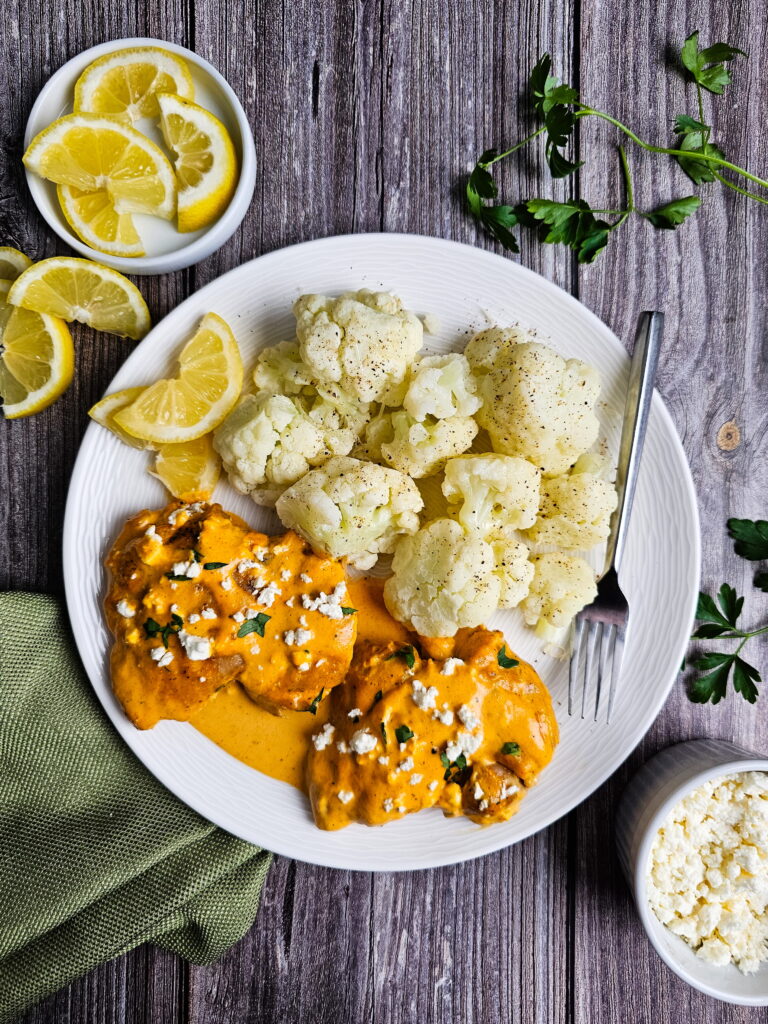
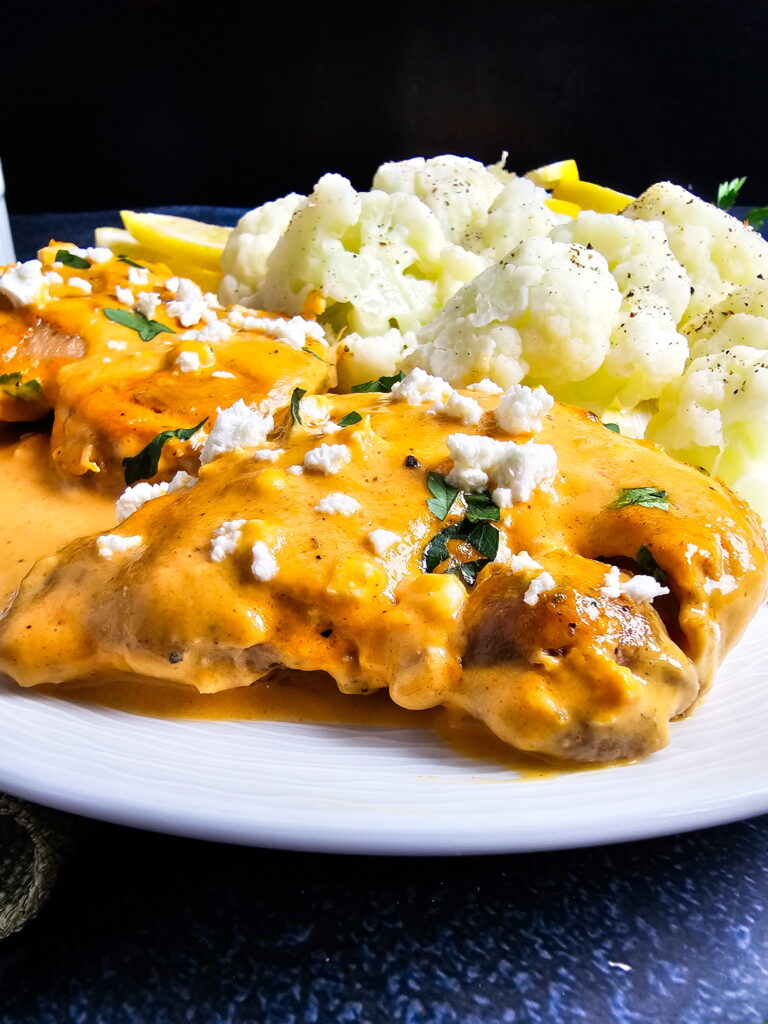
Cauliflower rice is the most seamless low-carb pairing — it absorbs the red pepper sauce the way regular rice would and adds almost no carbohydrates to the plate. If you want a slightly more textured base, cauliflower mash is another excellent option and the creaminess echoes the sauce without competing with it.
Zucchini noodles work well if you want to lean into the pasta-adjacent feeling that a cream sauce naturally suggests. Spiralize them fresh, salt lightly and let them sit for five minutes to draw out moisture, then toss briefly in the sauce rather than cooking them separately, which causes them to become watery.
Roasted or sautéed vegetables round the plate nicely. Broccolini with a small amount of olive oil and garlic, roasted asparagus, or simply sautéed spinach with lemon all cut through the richness of the cream sauce while staying firmly in the low-carb zone.
If you are not strictly tracking carbs, this dish is also exceptional over regular jasmine rice or pasta, particularly pappardelle, which holds the chunky sauce beautifully.
Looking for More Low Carb Recipes? Try These!
Creamy Low Carb Chicken Casserole with Pork Rind Topping (No Canned Soup)
This creamy low carb chicken casserole is rich, comforting, and topped with a crispy pork rind crust for the perfect crunch. Made without canned soup, it is a homemade dinner packed with flavor.
The Best Low Carb Chicken Crust Pizza – High Protein Recipe
This low carb chicken crust pizza is high in protein and gives you all the pizza flavor without the heavy carbs. A great option when you want a filling pizza night alternative.
Low-Carb Mongolian Ground Beef and Cabbage: 20-Minute Meal
This low carb Mongolian ground beef and cabbage recipe is a fast 20-minute dinner loaded with savory sweet flavor. It is budget friendly, easy, and perfect for busy nights.
Easy Homemade Low-Carb Sloppy Joe
This homemade low carb sloppy joe has all the classic sweet and savory flavor you love without the extra carbs. It is quick to make and perfect served in lettuce wraps or low carb buns.
Final Thoughts
This low carb chicken thighs recipe is the kind of dish that proves you do not have to sacrifice flavor or satisfaction to eat in a way that works for your body. The roasted red pepper cream sauce is genuinely outstanding — sweet, smoky, slightly tangy, deeply savory — and the goat cheese finish elevates it past what most restaurant versions of this dish deliver. The velvety sauce clinging to golden-seared chicken thighs is one of those dinner combinations that looks and tastes like you worked much harder than you did.
Make it once and you will have it in permanent weeknight rotation.
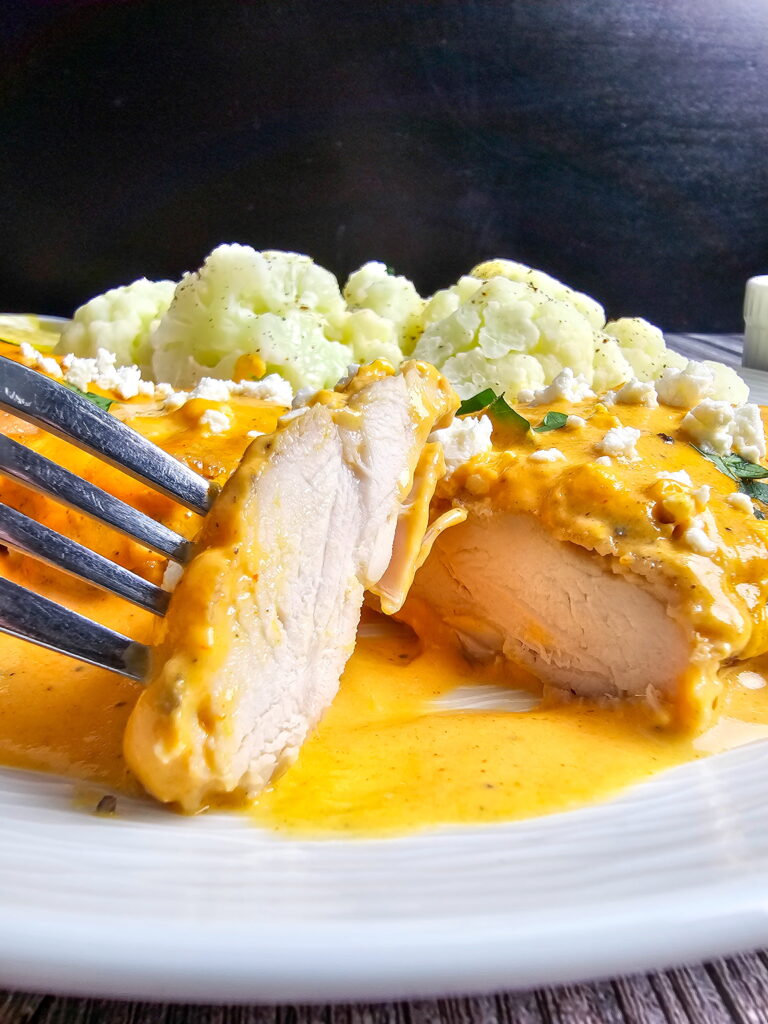

Roasted Red Pepper Chicken Thighs with Creamy Goat Cheese Sauce (Low Carb)
Equipment
Ingredients
For the Chicken:
- 1½ pounds boneless skinless chicken thighs
- 1 tablespoon coconut oil or olive oil
- 1 teaspoon kosher salt
- ½ teaspoon black pepper
- 4 ounces goat cheese crumbled
- 2 tablespoons fresh parsley chopped
Roasted Red Pepper Cream Sauce:
- 3 red bell peppers
- 3 cloves garlic
- 2 tablespoons olive oil
- ½ cup heavy cream
- ¼ cup chicken broth
- ½ teaspoon smoked paprika
- 1 teaspoon lemon juice or white wine vinegar
- salt and pepper to taste
Instructions
- Roast the Peppers: Preheat your oven to 450 degrees. Place the whole red bell peppers directly on a sheet pan — no oil, no foil, just the raw peppers on the pan. Roast for 20 to 25 minutes, turning once halfway through, until the skins are blistered and beginning to char in spots. You want real color here. Pale, barely-roasted peppers do not develop the flavor you are after. The skin should be dark and pulling away from the flesh in places.
- Transfer the hot peppers to a bowl immediately after they come out of the oven and cover the bowl tightly with plastic wrap or a plate. Let them sit for 10 minutes. This is the steam step, and it is important — the trapped steam loosens the skin from the flesh, making it easy to peel. If you skip it and try to peel them while they are just out of the oven, the skin tears and you lose flesh with it.
- After 10 minutes, peel off the skins — they should slip off with very little effort. Remove the stems and seeds and roughly chop the flesh. Do not worry about getting every piece of charred skin off. A few bits of char in the sauce add flavor rather than detracting from it.
- Season and Sear the Chicken: Pat the chicken thighs completely dry with paper towels. This step is not fussy — it is functional. Wet chicken does not sear, it steams, and you will not get the golden crust that makes this dish look and taste as good as it does. Season both sides generously with the kosher salt and black pepper.
- Heat the coconut oil or olive oil in a large skillet over medium heat until it shimmers. Add the chicken thighs smooth side down and do not touch them. Let them cook for 5 to 6 minutes undisturbed. Resist the temptation to check or move them. The chicken will release naturally from the pan when the crust has formed — if it is sticking, it is not ready. Flip and cook another 5 to 6 minutes until cooked through and golden on both sides.
- Remove the chicken from the skillet and set it aside on a plate. Leave the browned bits and any rendered fat in the pan. Those browned bits — the fond — are going to flavor your sauce base in the next step, and losing them by wiping the pan or deglazing too aggressively would be a waste.
- Build the Sauce Base: Reduce the heat to medium-low. Add 2 tablespoons of olive oil to the same skillet. Add the minced garlic and cook for about 30 seconds, stirring constantly, just until it becomes fragrant. You want the garlic to bloom in the oil without browning. Browned garlic turns bitter and will give the sauce an off note that no amount of cream will cover.
- Add the chopped roasted peppers and the chicken broth. Stir to combine and let the mixture simmer gently for 2 to 3 minutes. The broth will pick up the fond from the bottom of the pan — use your spoon to scrape those bits up as the liquid loosens them. This is where the fond goes from being a stuck residue to being an active flavor component in the sauce.
- Blend Until Silky: Carefully transfer the pepper and broth mixture to a blender. If you have an immersion blender you can use it directly in the pan, but a countertop blender will give you a smoother, silkier result. Blend on high until the sauce is completely smooth with no visible pepper chunks. The color at this point should be a vivid, deep orange-red. If it looks pale or pinkish, your peppers needed more roasting time.
- Be careful when blending hot liquids. If you are using a standard blender, fill it no more than halfway, hold a folded kitchen towel over the lid, and start on low before increasing speed. Steam pressure builds quickly with hot liquids and a loose lid will cover your ceiling in red pepper sauce.
- Finish the Cream Sauce: Return the blended sauce to the skillet over medium-low heat. Add the heavy cream, smoked paprika, and lemon juice. Stir to combine and let the sauce simmer gently for 3 to 4 minutes, stirring occasionally, until it thickens slightly and the color deepens. Do not let it boil hard — a gentle simmer is all you need and aggressive heat will break the cream.
- Taste the sauce at this point and adjust salt and pepper. This is also the moment to decide if you want more acid. Start with one teaspoon of lemon juice and taste before adding more. The sauce should taste rich and slightly smoky from the paprika, sweet from the peppers, and bright enough that the creaminess does not feel heavy.
- Bring It Together: Return the seared chicken thighs to the skillet and spoon the sauce generously over each piece. Sprinkle the crumbled goat cheese evenly over the top of the chicken and sauce. Cover the pan and let everything cook together over medium-low heat for 2 to 3 minutes. The goat cheese will soften and partially melt, the sauce will thicken slightly more as it reduces around the chicken, and the flavors will meld.
- Finish and Serve: Remove the lid, scatter the chopped fresh parsley over the top, and serve immediately. The dish looks best served directly from the skillet at the table — the deep red sauce against the golden chicken and the white goat cheese is genuinely beautiful and requires no additional styling.